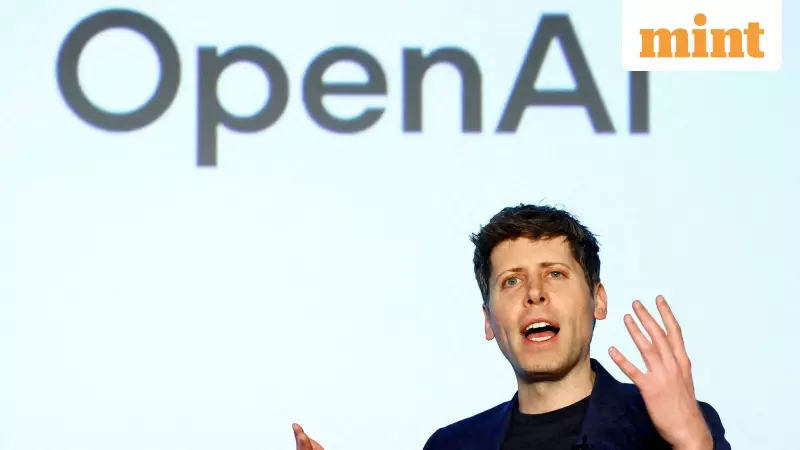
The artificial intelligence race has taken a dramatic turn, with Alphabet's Google applying intense pressure on ChatGPT-maker OpenAI. This escalating competition is now casting a shadow over the massive financial bets placed by OpenAI's key partners, tech giants Oracle and Microsoft.
Google's Gemini Shakes Up the AI Hierarchy
Last month, Google launched its Gemini 3 AI model to significant acclaim. The model not only won praise from users and analysts but also managed to outperform OpenAI's latest offering, GPT-5.1, in several key benchmarking tests. This development has directly challenged OpenAI's position as the perceived leader in the generative AI space.
Data from AI benchmarking firm Artificial Analysis indicates that Gemini 3 Pro mode appears to outperform GPT 5.1 on general intelligence and coding-specific tasks. While it is noted to be more expensive to use, its performance has sent shockwaves through the industry. Furthermore, Gemini's user base is growing rapidly, now boasting over 650 million monthly active users, a substantial jump from around 450 million in July.

OpenAI's "Code Red" and the Ripple Effect on Partners
In response to Google's advance, OpenAI has declared an internal "code red." According to an internal memo from CEO Sam Altman reported by The Wall Street Journal on Tuesday, the startup is redirecting resources to improve ChatGPT. This strategic shift means delaying other key monetization initiatives, including advertising projects, AI agents for health and shopping, and a personal assistant product.
This delay is the core of the problem for Oracle and Microsoft. OpenAI has staggering spending commitments totaling more than $1 trillion, which include a $300 billion cloud-computing deal with Oracle and a $250 billion arrangement with Microsoft. The company, valued at around $500 billion, expects to hit over $20 billion in annualized revenue this year. However, its backers are counting on revenue from the now-delayed initiatives like advertising and subscriptions to fund these commitments.
Altman's ambitious target of reaching $100 billion in annual revenue by 2027 now faces a serious threat. If Google's Gemini continues to capture market share, OpenAI's revenue trajectory could be derailed, pushing back its timeline for profitability and raising urgent questions about its long-term sustainability.
The Broader Competitive Landscape Intensifies
The pressure on OpenAI is not solely from Google. The competitive field is becoming increasingly crowded. Chinese AI startup DeepSeek recently released two new large-language models. The company claims its DeepSeek-V3.2 matches the performance of GPT-5 on multiple benchmarks, with a more computing-intensive variant even surpassing GPT-5 and matching Gemini 3 Pro in reasoning capabilities.
Analysts like D.A. Davidson's Alexander Platt have expressed excitement about DeepSeek's technical paper, heightening anticipation for a future "DeepSeek-4" release. Additionally, Google's AI is set to receive another massive boost; Bloomberg reports that Gemini will power Apple's digital assistant Siri starting early next year, potentially giving it an even wider user reach.
While ChatGPT currently maintains a strong user base of 800 million weekly active users (up from 700 million in July), the faster growth rate of Google's AI and the arrival of capable rivals signal a tough road ahead. OpenAI's challenge is to maintain its innovation edge while also finding a path to monetization that satisfies its monumental financial obligations. All eyes, especially those at Microsoft and Oracle, will be watching its next move closely.