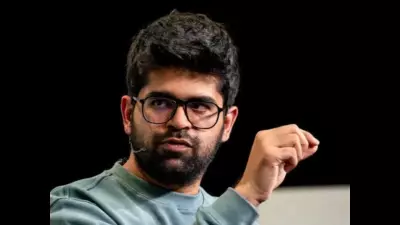
In a significant development for educational institutions grappling with artificial intelligence, former OpenAI researcher Andrej Karpathy has delivered a stark warning to educators worldwide. The prominent computer scientist has declared that attempts to detect AI-generated homework using technological tools are fundamentally flawed and destined for failure.
The End of AI Detection in Education
Karpathy made his position unequivocally clear through a detailed post on his X (formerly Twitter) account on November 28, 2025. "You will never be able to detect the use of AI in homework. Full stop," he asserted. The researcher elaborated that all current AI detection mechanisms not only fail to perform reliably but can also be easily circumvented through various methods.
According to Karpathy, the very principle behind AI detection tools is flawed, making them "doomed to fail" in the long run. His solution involves a fundamental shift in educational assessment methodology. He recommends that educators should operate under the assumption that any work completed outside classroom settings has likely involved AI assistance to some degree.

Returning to Monitored Assessments
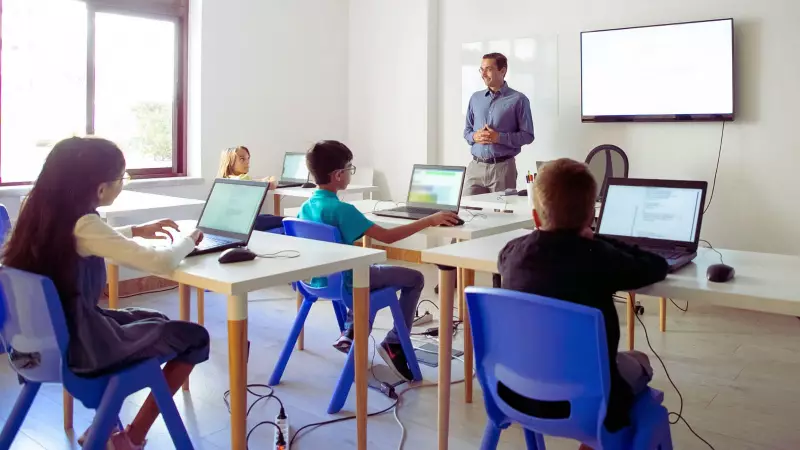
The former OpenAI expert proposes a significant restructuring of how student evaluation occurs. Karpathy advocates shifting the majority of grading to in-class settings where teachers can physically monitor students as they work. This approach, he argues, serves multiple crucial purposes in the age of artificial intelligence.
"The students remain motivated to learn how to solve problems without AI because they know they will be evaluated without it in class later," Karpathy explained. This maintained motivation ensures that students develop fundamental problem-solving skills while still having access to AI tools for supplementary learning and assistance with external assignments.
Karpathy emphasized that this isn't about resisting technological progress but about creating a balanced educational environment. He drew parallels with the introduction of calculators in mathematics education, noting how schools traditionally taught basic arithmetic and mathematical concepts to ensure students could perform calculations manually, even while having access to calculators for practical applications.
Learning to Work With and Without AI
The computer scientist clarified that his position isn't anti-AI. In fact, he strongly believes that students must learn to use AI effectively since the technology is here to stay and will become increasingly integrated into professional and academic environments.
However, Karpathy highlighted a critical distinction between calculators and current AI systems. "With a calculator, one knows what it is doing for them, so in case it gives a wrong answer, they should be able to notice it, 'gut check it', or verify it in some other way," he noted.
This verification capability becomes particularly crucial with AI systems, which Karpathy describes as "a lot more fallible" compared to calculators in various contexts. The ability to critically evaluate AI outputs and function independently becomes an essential skill in an AI-augmented world.
Karpathy's recommendations come at a pivotal moment for educational institutions worldwide. As AI adoption accelerates in academic settings, often outpacing the development of comprehensive policies and frameworks, educators face increasing challenges in maintaining academic integrity while preparing students for a technology-driven future.
The researcher suggested that evaluation methods remain at teachers' discretion and involve creative design approaches that may include various conditions: no tools, cheat sheets, open books, provided AI responses, or direct internet and AI access during assessments.
Ultimately, Karpathy envisions an educational system where students become proficient in utilizing AI tools while simultaneously developing the skills and knowledge to operate effectively without them. This dual capability, he argues, should become the central goal of education in the artificial intelligence era.