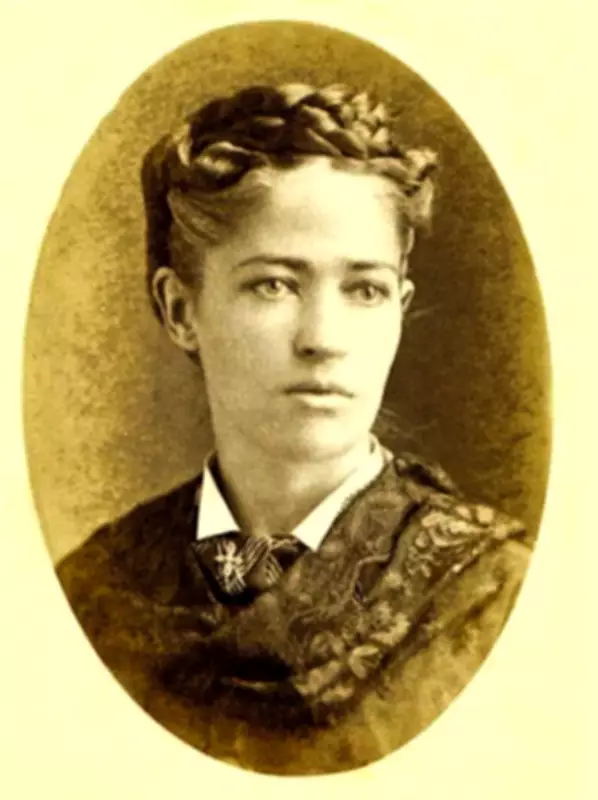
Every time you fill gleaming dishes into your cabinets and switch on the dishwasher, you rely on a tradition that did not originate in a futuristic laboratory but in a nineteenth-century kitchen. Our perception of kitchen devices often confines them to sudden innovations born from scientific miracles. However, the dishwasher was invented out of frustration in high society.
Josephine Cochrane's Frustration
During the 1880s, Josephine Cochrane grew tired of receiving cracked and chipped dishes from the kitchen. Instead of merely complaining about household chores, she chose to create a solution. In her well-known jest, if no one else could invent a washing machine, she would try herself. She sought a machine that would wash dishes faster than any human and, crucially, without mistakes. Her story illustrates how a simple domestic annoyance could evolve into a mechanical system that later proved groundbreaking.
Turning Domestic Losses into Mechanical Design
The journey from a foamy sink to a patented invention was driven by Cochrane's unique perspective on housekeeping. According to the Lemelson-MIT program, Cochrane was acutely aware of the flaws in contemporary methods. She knew that cleaning delicate items in a sink posed risks because plates inevitably collided with each other and the sink itself. Her invention aimed to preserve valuable plates from accidental damage.

Although Cochrane did not invent the first dishwashing device, she uniquely rejected traditional scrubbing techniques. Records at the USPTO show her innovation marked a departure from the past by abandoning rubbing and brushing. Previous inventors had attempted machines with wooden scrubbing brushes to mimic hand rubbing, with little success. Cochrane revolutionized the concept by using water to wash dishes. Her design incorporated wire slots to hold dishes while jets of soapy water sprayed them.
Patented in 1886, widespread adoption took decades due to infrastructure limitations. Hotels and restaurants first benefited from her ingenious design, fundamentally changing home maintenance.
The Birth of an Engineering System
The transition from manual cleaning to pressure cleaning marked the birth of a true engineering system. The dishwasher became a capable device rather than a bizarre gadget. Though a socialite without engineering knowledge, Cochrane's insight into the problem of hard cleaning enabled her to design a machine that could expand beyond her kitchen. For a machine to be useful, it must be more reliable than a human.
A Long Journey from Patent to Kitchen
Cochrane's innovation was genius but did not immediately transform the world. She patented her automatic dishwasher on December 28, 1886. However, history shows the considerable time between conception and application. The typical household acquired its dishwasher only in the mid-twentieth century.
The delay occurred because infrastructure did not yet exist. Household plumbing lacked heavy-duty piping or capacity to hold enough hot water for her invention. Hence, Cochrane's success first came in hotels and restaurants with large volumes of dishes.
Her contributions highlight the importance of a female perspective in a male-dominated field. The issue she addressed was personal because the consequences of damaged dishware were direct and obvious. When the commercial sector adopted her invention in the 1950s, the engineering principles she established in 1886 remained core to its structure. Cochrane not only made plates clean but demonstrated how mundane domestic tasks could be redesigned with mechanical integrity. The frustration of chipped dishware proved to be one of many factors that shaped today's household environment.