A new report from Microsoft has revealed a significant surge in the adoption of generative artificial intelligence tools worldwide, but with a concerning twist: the gap between advanced and emerging economies is widening. The analysis shows that while global adoption reached 16.3% of the world's population in the final quarter of last year, growth in developed nations is nearly double that of developing countries.
The North-South AI Divide Widens
According to the report, which is based on anonymised telemetry data tracking global device usage, AI adoption in the "global north"—a term Microsoft uses for developed economies—is accelerating at a much faster pace. Juan Lavista Ferres, chief data scientist at Microsoft's AI for Good Lab, expressed concern over this trend, stating, "We are seeing a divide and we are concerned that that divide will continue to widen." This disparity underscores a new form of digital inequality taking root in the age of artificial intelligence.
Countries that made early investments in digital infrastructure continue to lead in AI adoption. The United Arab Emirates, Singapore, France, and Spain are among the frontrunners. These findings align with previous research, including studies by the Pew Research Center, which indicated higher enthusiasm for AI in nations like South Korea.

DeepSeek's Disruptive Role in Emerging Markets
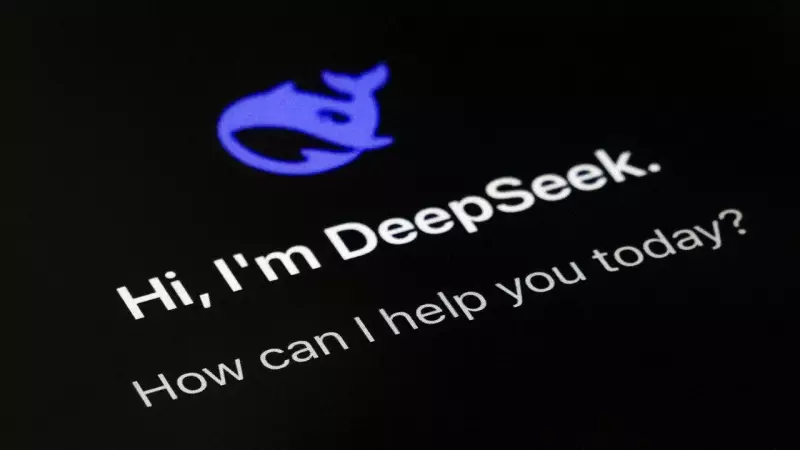
Against this backdrop of inequality, the rapid rise of Chinese AI startup DeepSeek has emerged as a crucial counterforce in parts of the developing world. Founded in 2023, DeepSeek has played a pivotal role in expanding AI access. Microsoft researchers attribute its success to its free-to-use and "open source" models, which have dramatically lowered financial barriers, especially in price-sensitive regions.
The startup gained global attention in January 2025 with the release of its advanced reasoning model, R1. DeepSeek claimed R1 was more cost-effective than comparable offerings from industry leader OpenAI. Later that year, research co-authored by DeepSeek founder Liang Wenfeng and published in the prestigious journal Nature described the work as a "landmark paper."
Lavista Ferres noted that while DeepSeek excels in tasks like mathematics and coding, its approach differs from US-based models on politically sensitive topics. "For certain type of questions, of course, they follow the same type of access to the internet that China has," he explained, adding that responses on political issues can vary significantly.
Geopolitical Implications and Market Penetration
The Microsoft report found DeepSeek's adoption is largely concentrated outside North America and Europe, where several governments have raised security concerns. The United States, Germany, and Australia have moved to restrict its use, and Microsoft itself banned its employees from using the platform last year.
Conversely, DeepSeek's usage has skyrocketed in China and in nations where access to US technology platforms is limited. Its adoption is particularly high in:
- China: ~89% market share
- Belarus: ~56% market share
- Cuba: ~49% market share
- Russia: ~43% market share
- Iran & Syria: 23-25% market share
In several African nations, including Ethiopia, Zimbabwe, Uganda, and Niger, DeepSeek holds a market share between 11% and 14%. A key driver of this growth has been the platform being pre-installed or promoted on smartphones from Chinese manufacturers like Huawei.
The report concludes with a significant observation on the geopolitical dimension of this trend: "Open-source AI can function as a geopolitical instrument, extending Chinese influence in areas where Western platforms cannot easily operate." This highlights how technology, particularly accessible AI, is becoming a new frontier in global influence, offering an alternative to ecosystems dominated by Western companies and reshaping digital access across the developing world.