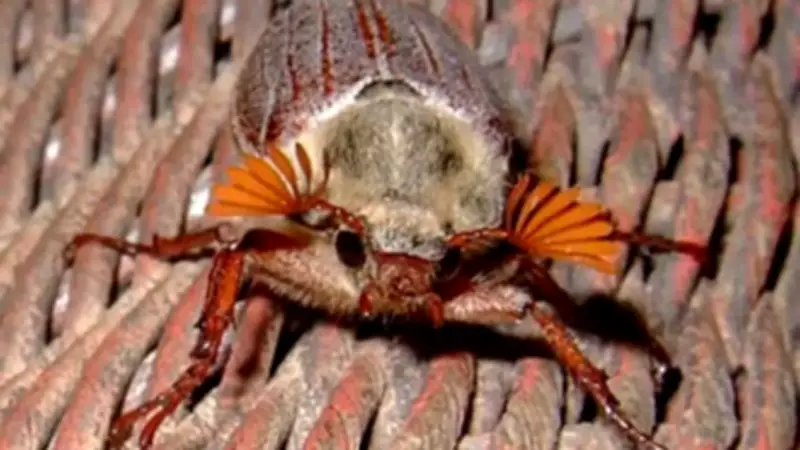
Cockchafer Beetles' Fan-Shaped Antennae: Nature's Advanced Chemical Sensors
The cockchafer beetle, a member of the Melolontha genus, possesses a remarkable anatomical feature that sets it apart in the insect world: fan-shaped antennae. These are not merely decorative appendages but highly specialized sense organs critical to the beetle's survival and reproduction.
Structure and Function of the Antennae
The antennae of cockchafers are composed of multiple segments, with the terminal sections forming a distinctive "club" that can expand into a fan-like structure. This fan is made up of flattened plates known as lamellae, which are rich in chemical receptors. The expanded surface area provided by this lamellate design significantly enhances the insect's ability to detect faint chemical signals from its environment.
Research indicates that these antennae primarily function by responding to chemical cues, allowing cockchafers to identify potential food sources, locate mates, and perceive other environmental stimuli. The fan-shaped configuration ensures maximum air contact, increasing the probability of capturing volatile compounds essential for navigation and communication.

Gender Differences and Pheromone Detection
An intriguing aspect of cockchafer antennae is the variation between males and females. Typically, male cockchafers possess seven lamellae, while females have only six. This anatomical distinction is closely linked to their sensory capabilities, particularly in detecting pheromones during breeding seasons.
A study published in Wiley, titled "Electrophysiological and behavioural responses of Melolontha melolontha to saturated and unsaturated aliphatic alcohols," confirms that male cockchafers rely on olfaction to locate females for mating. The specialized antennae enable precise tracking of pheromone trails, facilitating reproductive success.
Mechanisms of Sensitivity and Control
The fan-shaped design is not static; cockchafer antennae can open and close, a mechanism that may help regulate sensitivity under varying environmental conditions. According to research in Zoomorphology on "The Anatomy and Ultrastructure of the Antennal Circulatory Organs in the Cockchafer Beetle (Melolontha melolontha)," this movement is governed by internal pressure systems, allowing the insect to optimize chemical detection as needed.
Additionally, sensory neurons within the antennae are adept at detecting volatile chemicals from plants and other sources, aiding in food location. This dual functionality—mate and food detection—highlights the antennae's role as multifunctional sensory tools.
Comparison with Other Insect Antennae
Insect antennae exhibit diverse forms tailored to specific functions, such as threadlike, club-like, or comb-like structures. In contrast, cockchafers' lamellate antennae are uniquely optimized for odor detection. This specialization is crucial for their lifestyle, as they must navigate larger areas to find both mates and sustenance, relying on chemical cues over broader distances.
Scientific Insights and Implications
Scientific evidence underscores that cockchafer antennae are evolved organs designed for efficient chemical sensing. The lamellate shape enhances sensitivity to pheromones and environmental chemicals, with anatomical differences between sexes underscoring their importance in reproduction and ecological interaction.
Understanding these mechanisms not only sheds light on insect biology but also inspires advancements in biomimetic sensors and olfactory technology, demonstrating nature's ingenuity in sensory adaptation.