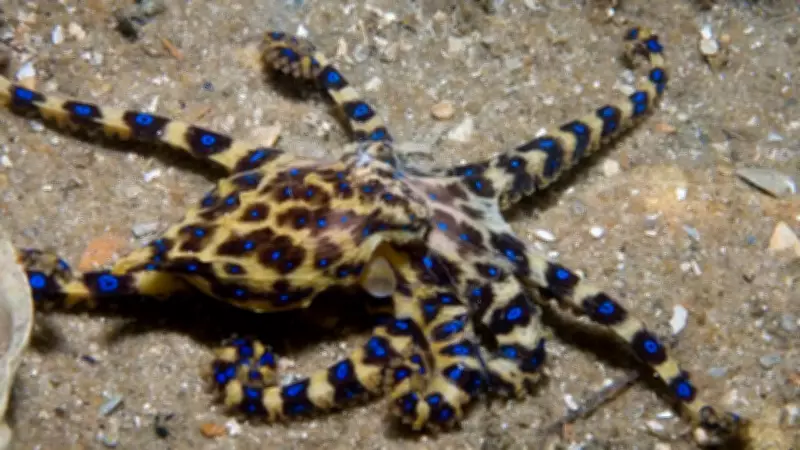
Among the ocean's most dangerous creatures, size is not everything; in fact, some of the smallest marine animals are among the most dangerous. For example, the blue-ringed octopus has an extremely powerful venom that can kill a person within minutes. This small creature is about the size of a golf ball and has a very calm appearance, making it easy to overlook.
One of the unique characteristics of this species is not only the strength of its venom but how it is used for hunting, protection, and copulation. The ways in which this small animal interacts with its environment provide insight into why it is rated as one of the most dangerous oceanic species.
How Blue-Ringed Octopus Venom Causes Paralysis
The octopus uses the neurotoxin tetrodotoxin (TTX), one of the deadliest toxins on Earth. The neurotoxin prevents communication signals from traveling between nerve endings and muscles by blocking sodium channels, thereby disabling their ability to communicate. After entering the body, an individual can suffer several symptoms, including rapid paralysis of muscles, which includes the muscles responsible for breathing, leading to death if immediate action is not taken. According to research published in Marine Biology, there have been numerous studies proving that the blue-ringed octopus does not manufacture TTX alone but rather gets it from a bacterium in its salivary glands.

Blue-Ringed Octopus Venom Study Reveals Unusual Behavior
The threat posed by this octopus is not only through its defenses or hunting. Recent research has also shown that the venom from the male blue-lined octopus contributes to reproduction. According to a study published in Current Biology, male blue-lined octopuses utilize venom injection to paralyze females during mating, ensuring safety from attack or consumption. The injection, through the exacting control of venom, illustrates that it is possible to utilize venom at a level where incapacitation will not cause permanent injury, thus demonstrating an advanced level of biological adaptation.
Why This Small Octopus Is Considered One of the Deadliest Marine Animals
The combination of being very small, powerful, and fast makes the blue-ringed octopus extremely hazardous. In terms of potency, its venom is much more potent than many other known toxins. Unfortunately, there is not any widespread antivenom for it yet. Another thing that makes the octopus dangerous is the fact that it can remain hidden rather easily. Octopuses tend to blend in with their environment until they are under threat and display their brightly colored blue rings. Since the wound from an attack is small and painless, it is not always recognized right away.
How This Venomous Octopus Survives in the Wild
Even though it has such a deadly poison, the blue-ringed octopus is very non-aggressive. Most of the time, this octopus uses its poison for catching tiny prey or for protecting itself in case of danger. The unique nature of this creature is that it does not depend on physical strength because of its small size but is still able to paralyze other animals with its venom. This combination of features is exactly why this animal is so dangerous and unique.
A Small Creature with an Unexpectedly Powerful Defense
The blue-ringed octopus shows that the size of an organism does not define its effect on the environment or other creatures. A small creature that could easily go unnoticed has a biological component that affects humans in just a few seconds after contact. The biology of this octopus has been researched more than many other marine species to gain further understanding of both marine ecosystems and their neurotoxins when interacting with the human body.