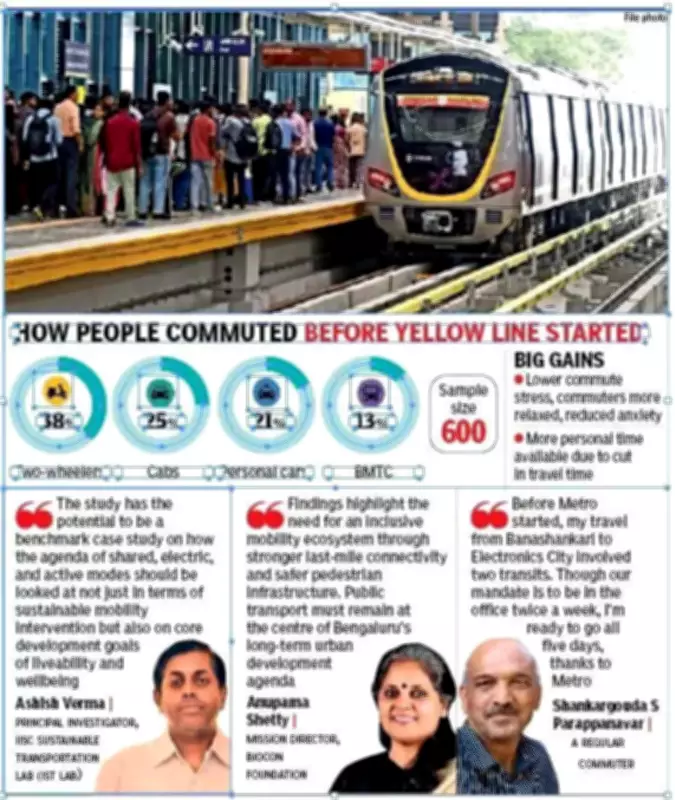
A recent study by the Indian Institute of Science (IISc), funded by Biocon Foundation and ELCIA, has found that Bengaluru's Yellow Line Metro is providing an unexpected fitness boost to commuters. The 18.9-kilometer route from RV Road to Bommasandra, which snakes through the city's tech corridor, has reduced travel time from a pollution-filled 2.5 hours to a breezy 30 minutes. However, the benefits extend beyond time savings.
Increased Physical Activity
Regular commuters on the Yellow Line are now clocking an additional 10-15 minutes of daily walking for Metro and related commutes, according to the study. These daily walks add up to 50-75 minutes of moderate physical activity every week, a significant increase for those who previously had a largely sedentary lifestyle due to long commutes.
Study Details
The study, conducted between July 2025 and February 2026, surveyed 600 commuters. It included a comprehensive baseline survey before the Yellow Line's inauguration in August 2025, followed by a phone survey six months later. Before the line's launch, 38% of respondents traveled by two-wheelers, 25% by cabs, 21% by private cars, and the rest by public road transport.

A major concern highlighted by 58% of respondents was minimal physical activity, well below the World Health Organization's recommended minimum of 600 MET minutes per week. Regarding lifestyle diseases, 15% admitted to hypertension, 18% to diabetes, and 4.6% to respiratory illnesses.
Health and Wellbeing Gains
The modal shift to the Yellow Line has delivered clear gains in physical activity, mental wellbeing, and reduced exposure to polluted air. Two-wheeler riders who previously absorbed high doses of PM2.5 now travel in climate-controlled, enclosed environments, experiencing near-zero direct outdoor pollution exposure. Respondents reported feeling less tired, more in control of their daily routines, and enjoying a better work-life balance. Additional benefits include increased social interaction during daily journeys, reduced travel delays, lower fatigue, and greater energy for personal and family responsibilities.
The study underscores the positive impact of public transportation on commuter health, beyond mere convenience and time efficiency.