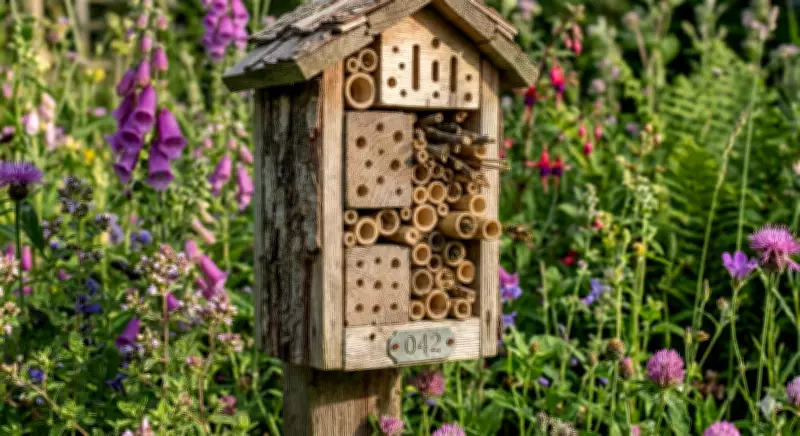
Remember that charming wooden box with hollow tubes you placed in your backyard last spring? It may not be the pollinator paradise you imagine. Bee hotels have gained significant attention in the sustainability spotlight. However, simply purchasing one and attaching it to a fence post is insufficient. In fact, it might create unintended problems.
What a Bee Hotel Actually Is
The concept behind bee hotels is straightforward. Native bees, such as mason bees and leafcutter bees, require small spaces to nest. In urban and suburban areas, natural nesting sites are often scarce. Bee hotels aim to fill this gap by providing readily available nesting spaces in environments where natural materials are limited.
A landmark 2015 study titled 'Bee Hotels' as Tools for Native Pollinator Conservation: A Premature Verdict? surveyed nearly 600 bee hotels over three years. It found that campaigns to save bees often promote these devices despite a lack of solid data confirming a net positive effect. Some installations attracted a diverse range of species, while others revealed a more troubling reality. The structures intended to help native bees also drew invasive species, disease, and parasites.

Yes, a bee hotel can assist native bees, but it can also quietly exacerbate issues, depending on how it is managed.
The Part Nobody Tells You: Maintenance Is Non-Negotiable
This is where many well-meaning gardeners err. A bee hotel is not an ornament to hang and forget. It is a managed nesting structure. At their worst, bee hotels may function as population sinks for bees. Artificially concentrating nesting sites at densities greater than natural creates ideal conditions for parasites and predators to thrive. The structure meant to be a safe haven can accelerate the very threats it was designed to mitigate.
Where You Put It Matters More Than How It Looks
Many people choose a location for a bee hotel because it appears cute near the herb garden or fits nicely on the back fence. However, placement should prioritize the bees, not aesthetics. Bee hotels are most useful in areas where native bees lack natural nesting material, such as dense urban yards or manicured spaces with little bare ground or dead wood. Placing one in a garden with good natural habitat may yield no benefit. Thoughtful placement in spots where native bees are already active can make a real difference.
Placement also affects monitoring. If the hotel is hidden behind a rarely visited shed, problems may go unnoticed. A well-placed bee hotel can support native species, but left unmanaged, it can concentrate parasites and attract invasive bees.
The Invasive Bee Problem Is Real
One lesser-discussed risk of bee hotels is the arrival of invasive species. A study published in Acta Oecologica found a significant negative correlation between the arrival of invasive bee species and the presence of native cavity nesters in managed nesting sites. Invasive species moved into bee hotels, displacing native bees. Nest evictions and deadly encounters between invasive and native species were directly observed.
This matters because most bee hotel marketing focuses on hoped-for outcomes, not actual results. When an invasive species like the giant resin bee occupies your hotel, it actively displaces the native pollinators the structure was meant to support.
The Parasite Risk
Beyond invasive species, parasites pose a significant threat. Many bees use the same nest structure across seasons, allowing for greater buildup and transmission of pathogens and parasites compared to dispersed natural nests. Parasitism rates in bee hotels are higher than in natural nesting sites, partly because aggregated nests make it easier for parasites to find and move between hosts.
This does not mean you should immediately remove your bee hotel; rather, you must be realistic about the commitment. Sanitation, seasonal replacement of nesting material, and regular checks are not optional extras; they are essential.

The Right Way to Look at It
If you want to support native bees, a bee hotel can be part of your approach, but it works best as part of a larger effort that includes native plants, reduced pesticide use, and preserved natural ground cover. Keep the focus on the goal: this is a structure for native bees, not a general insect welcome mat. Periodically empty it, replace nesting tubes when worn or showing signs of pest activity, and place it somewhere you will frequently see and monitor.
A bee hotel, done right, is a useful tool. Carelessly done, it is merely a wooden box containing problems.