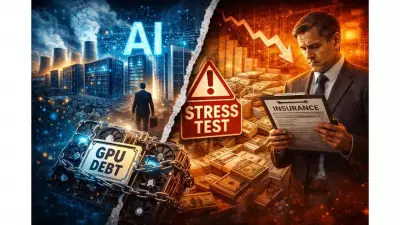
The intricate dance between global commodity markets and technological innovation is creating unexpected ripples across India's digital landscape. A fascinating case study emerges from the intersection of volatile crude oil prices and the development of advanced artificial intelligence platforms, such as the newly noted 'Whackyverse'. This connection underscores a broader economic reality: the fuel that powers the physical world is increasingly linked to the algorithms shaping our virtual one.
The Crude Reality: Oil's Unseen Hand on Digital Growth
For a nation like India, which is a major importer of crude oil, price fluctuations at the global pump have immediate and profound consequences. When the cost of a barrel of crude rises, it triggers a chain reaction. Transportation becomes more expensive, production costs for goods increase, and overall economic inflation can creep upward. This directly impacts disposable income and corporate investment budgets—the very capital needed to fuel digital adoption, startup growth, and consumer spending on tech services.
Conversely, a dip in oil prices can act as a stimulus, freeing up resources for both the government and consumers. These saved funds can potentially be redirected towards digital infrastructure, online services, and innovative tech projects. The state of the crude market, therefore, acts as a silent backdrop against which India's ambitious Digital India initiative plays out, influencing its pace and scale in ways often overlooked.

Whackyverse and the AI Counter-Narrative
Amidst these macro-economic pressures, homegrown technological innovation continues to surge forward. Enter platforms like Whackyverse, which represent the cutting edge of AI application. While the exact functionalities of Whackyverse are detailed in its own sphere, its emergence is symbolic of a resilient tech sector focused on creating unique digital experiences and solutions.
This development highlights a crucial trend: even as traditional economic factors like oil prices exert their influence, the engine of digital creativity in India is not shutting off. Developers and entrepreneurs are building sophisticated AI-driven environments—whether for entertainment, education, or enterprise—that cater to a new generation of internet users. These platforms are becoming less dependent on physical economic cycles and more attuned to the digital value they create.
The Interconnected Future: Energy, Economy, and Bytes
The relationship between crude oil and AI is not merely one of opposition but of complex interdependence. The data centers that power AI models like those behind Whackyverse consume massive amounts of energy. The cost and sourcing of this energy are, in part, tied to global hydrocarbon markets. Thus, the AI revolution has a hidden energy footprint connected to the very commodity markets it seeks to transcend.
Furthermore, AI is itself being deployed to optimize the exploration, extraction, and refining of crude oil, creating a feedback loop. For India, navigating this new reality means pursuing a dual strategy: managing the immediate economic vulnerabilities posed by oil imports while aggressively investing in and adopting digital technologies that promise long-term efficiency and growth.
The narrative is clear. India's journey towards a robust digital economy is being written under the shadow of global crude oil price charts and the glow of computer screens running complex AI algorithms. The success of platforms like Whackyverse will depend not just on brilliant coding, but also on the nation's ability to steer through the rough seas of global energy economics. The future belongs to those who can master the equation where bytes meet barrels.