In a startling case that highlights the potential for misuse of advanced artificial intelligence, an Indian employee successfully deceived his company's Human Resources department by using an AI image generator to fake a hand injury, leading to the immediate approval of his paid leave request. The incident, which occurred in late November 2025, has ignited a fierce online debate about the preparedness of corporate systems for the challenges posed by next-generation AI tools.
The AI-Assisted Deception
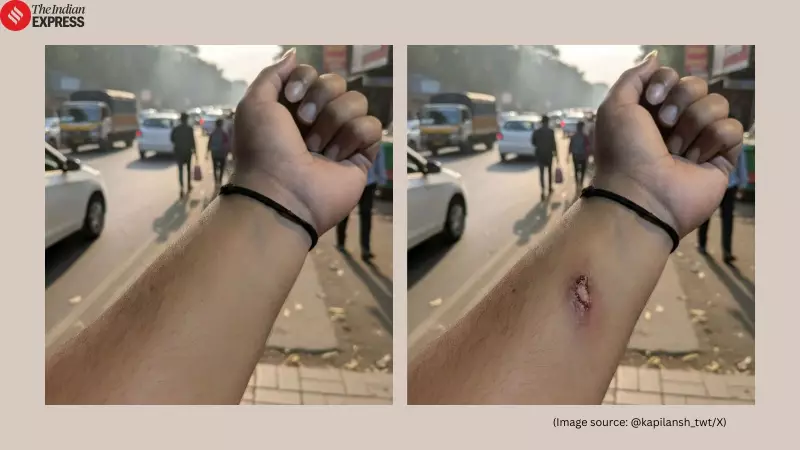
The entire episode began when the employee, whose identity remains unknown, decided to test the capabilities of Google's newly upgraded Nano Banana AI image generator. This tool is known for producing incredibly realistic and detailed images. From his workplace, the employee simply took a clean, uninjured photograph of his own hand. He then uploaded this image to the AI tool and typed a straightforward command: "add fake wounds."
To his own surprise, the AI generated a hyper-realistic injury in a matter of seconds. The fake wound was described as sharp, detailed, and medically believable, looking convincing enough to pass a casual inspection. Instead of treating this as a mere experiment, the employee then forwarded the AI-generated image to his HR team.

HR's Swift and Concerned Response
In a chat conversation that was later shared as a screenshot, the employee informed the HR department, "While coming to the office, I fell from my bike and got injured… I request paid leave for today, please." The HR team's reaction was instantaneous and unquestioning. They expressed concern for his well-being, promptly checked with a senior colleague for approval, and granted his request.
Their reply was supportive: "Don't worry. Please go to the doctor and get the dressing done… your paid leave for today is approved." The entire verification process, which relied solely on the visual 'proof' provided by the AI-generated image, was completed without any further questions, demonstrating a significant gap in the company's protocol.
Sparking a Widespread Debate
The story was later posted on the social media platform X (formerly Twitter) by user @kapilansh_twt on November 28, 2025, with a caption that went viral: "AI just broke HR verification." The post argued that many systems, including those in HR and insurance, are still using outdated methods to tackle modern problems, stating, "You can't fight 2025 problems with 2010 tools."
The incident quickly drew strong reactions from the online community, highlighting several key issues:
- One user pointed out that proper paid leave procedures typically require a certified medical report, not just a photograph.
- Another questioned the workplace culture that pressures employees to invent such elaborate excuses for a day off.
- A common sentiment was that if a company demands 'proof' for a simple sick day, it might indicate a deeper issue of trust.
- Critically, many echoed the need for systems to evolve, with one user stating, "This is exactly why HR, insurance & compliance teams need AI-powered verification."
This event serves as a stark warning for corporations worldwide. As AI technology becomes more accessible and its outputs more indistinguishable from reality, traditional verification methods are becoming obsolete. The incident underscores an urgent need for businesses to invest in and adopt more sophisticated, AI-driven security and verification protocols to prevent such fraud and maintain the integrity of their operational systems.