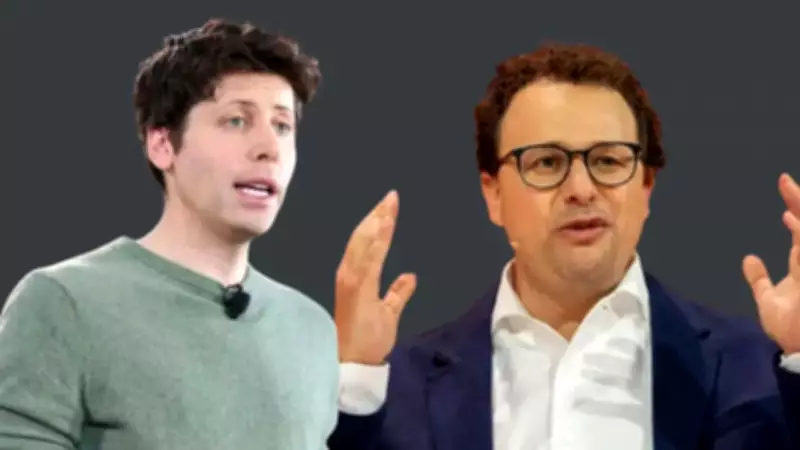
Sam Altman and Dario Amodei have been engaged in a public conflict for years, from disagreements over AI technology at OpenAI to the Anthropic CEO openly criticizing the ChatGPT-maker's contract with the US Department of Defense. This friction has become one of the most closely watched rivalries in the AI industry. However, in a latest development, the two have come together along with other tech CEOs and leaders urging members of Congress to adopt new laws that would make it harder for bad actors to develop biological weapons using their technology.
Open Letter to Congress
OpenAI CEO Sam Altman, Anthropic CEO Dario Amodei, Google AI CEO Demis Hassabis, and Microsoft AI's Mustafa Suleyman are among the signatories of an open letter to Congress titled “In Support of Mandatory Nucleic Acid Synthesis Screening and Recordkeeping.” The letter states, “AI systems are improving rapidly, and alongside incredible benefits to science and medicine, there is a real possibility that the knowledge barriers which have historically prevented bad actors from obtaining biological weapons will meaningfully erode.”
Key Points of the Letter
The letter, signed by leading figures in AI and biotechnology, calls on legislators to make screening of orders for synthetic nucleic acids—and the equipment needed to make them—mandatory. The ability to order synthetic DNA online has accelerated vaccine development and basic research, but it also poses a risk: since the publication of protocols to reconstruct viruses from strands of DNA more than two decades ago, this point in the biotechnology supply chain has been recognized as a vulnerability where a bad actor could cause outsized harm. To address this, the International Gene Synthesis Consortium was formed in 2009 to develop voluntary safeguards.

While the issue is not new, the pace of progress in artificial intelligence is. AI systems now outperform PhD-level virologists on questions about highly technical laboratory procedures. The evidence about what this means for present-day biosecurity threats is mixed, but the trend is hard to dispute. AI systems are improving rapidly, and the knowledge barriers that have historically prevented bad actors from obtaining biological weapons may erode.
Support for Screening
Support for screening does not depend on any particular view of AI; the biosecurity case has been recognized by scientists and governments for decades. Screening is one of the best understood and least disruptive biosecurity measures available. It asks providers of synthesized DNA and manufacturers of synthesis machines to check synthesis requests for sequences of concern and verify customer legitimacy before shipping orders. Providers should also record synthesis orders and sequence data to support legitimate biosecurity investigations, so that any threat that might evade initial screening can be traced back to its source—including when individual sequences would not raise concern in isolation. Awareness of traceability itself deters misuse.
Many of the largest and most responsible providers in the industry already screen and record orders voluntarily because it is well understood that they have an important role to play in maintaining public trust and mitigating potential misuse of this technology.
Urgency and Call for Action
Given the pace at which the underlying technology is changing, the signatories believe the need is urgent. They urge Congress to act this session and applaud the legislative efforts currently underway. To ensure a consistent national standard rather than a patchwork of conflicting laws, states should also consider implementing requirements based on existing federal and industry guidelines. This is a rare moment of agreement across stakeholders that are often at odds, and the letter concludes with a hope that policymakers will meet it with decisive action.