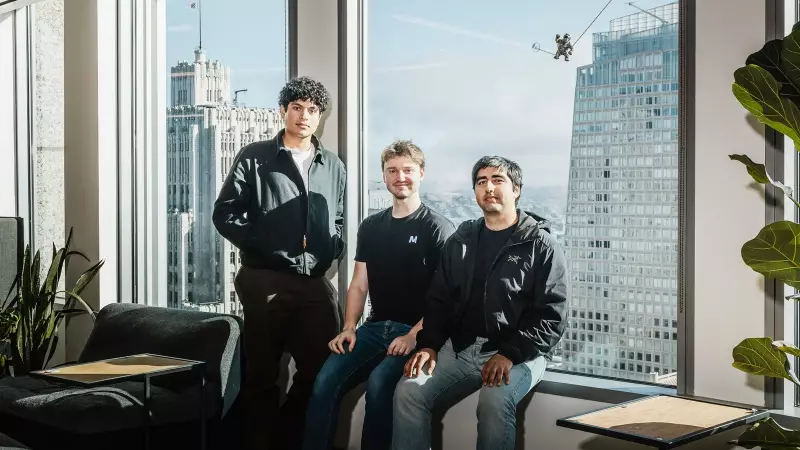
The explosive growth of artificial intelligence is not just reshaping industries; it is creating fortunes at a staggering pace. A recent analysis reveals that the AI boom has minted at least 12 new billionaires in the past year alone. These individuals, founders and early backers of pioneering AI firms, have seen their wealth skyrocket as the technology captures the world's imagination and investment.
The Architects of Intelligence: Founders Cashing In
At the forefront of this wealth creation are the visionaries who built the companies. The most prominent name is Sam Altman, the CEO of OpenAI. Despite his unconventional equity structure, Altman's vast holdings in the company, valued at over $80 billion, firmly place him in the billionaire club. His journey from tech entrepreneur to the global face of generative AI underscores the sector's meteoric rise.
He is not alone. Dario and Daniela Amodei, the sibling co-founders of OpenAI rival Anthropic, have each joined the three-comma club. Their company, founded with a focus on AI safety, has attracted billions in funding from Amazon and Google, catapulting its valuation and their personal net worths past the $1 billion mark.

The boom extends beyond just model creators. Alexandr Wang, the founder of Scale AI, has become a billionaire by providing the crucial data labeling and evaluation services that power AI development. His company, essential to the training of large language models, has become an indispensable part of the AI infrastructure.
The Investors and Enablers Reaping Rewards
The wealth wave has also lifted early investors and key executives. Jakob Uszkoreit, a former Google AI researcher and co-founder of AI biotech firm Inceptive, and Austin Lyons, an early OpenAI engineer, have seen their stakes become extraordinarily valuable. Venture capitalists like Ian Hogarth, who co-founded the AI-focused fund Air Street Capital and now chairs the UK's AI Safety Institute, and Lu Zhang, founder of Fusion Fund, have also crossed the billion-dollar threshold through savvy early bets.
Perhaps the most remarkable story is that of Jensen Huang, the co-founder and CEO of NVIDIA. While not a new billionaire, his wealth has ballooned by over $60 billion in the last year, making him one of the biggest beneficiaries of the AI surge. NVIDIA's chips are the literal engines of the AI revolution, and demand has sent the company's valuation soaring above $2 trillion.
Implications and the Future of AI Wealth
This rapid concentration of wealth highlights the transformative—and lucrative—power of artificial intelligence. The creation of so many new billionaires in such a short timeframe is reminiscent of the early days of the internet and social media booms. It signals a fundamental shift in the global economy, where data, algorithms, and computing power are the new currency of immense value.
However, this gold rush also raises important questions. The immense capital required for AI development—for computing power, talent, and data—could lead to a highly centralized industry dominated by a few well-funded players. The gap between the "AI haves" and "have-nots," both among companies and nations, is likely to widen. Furthermore, the ethical frameworks guiding this powerful technology are still being written by the very companies and individuals accruing vast wealth from it.
The story of the AI billionaires is still being written. As the technology evolves from generative chatbots to more integrated forms of artificial general intelligence (AGI), the landscape of wealth and power will continue to shift. One thing is clear: the AI revolution has its first generation of mega-wealthy titans, and their influence will shape the technological and economic trajectory of the coming decades.