The intersection of artificial intelligence and human creativity has sparked a fresh controversy, this time in the literary world of New Zealand. In a landmark decision, the organisers of the country's most prestigious literary award have disqualified two acclaimed authors, not for their writing, but for the AI-generated art on their book covers.
The Disqualification That Redefined Boundaries
The incident centres on the 2026 Ockham Book Awards and its lucrative NZ $65,000 fiction prize. The submitted works of two celebrated New Zealand authors—Stephanie Johnson's short story collection 'Obligate Carnivore' and Elizabeth Smither's novella collection 'Angel Train'—were removed from consideration. The reason was a violation of the awards' newly instituted guidelines concerning artificial intelligence. Crucially, the AI was not used in the prose itself but was employed to create the books' cover designs.
This decision, reported in early December 2025, has sent shockwaves through creative communities worldwide. It forces a critical examination of a growing dilemma: in an era where AI tools are increasingly accessible, how much AI involvement is permissible in a creative work? The case of Johnson and Smither highlights that the battleground is no longer just text or music but extends to every visual and design element associated with artistic production.

The Core Dilemma: Defining the Creative 'Lakshman Rekha'
The disqualification raises profound questions about authorship, originality, and the very definition of art. Awards like the Ockhams are designed to celebrate human imagination and skill. The use of AI, even in a supporting role like cover design, introduces a non-human agent into the creative process, complicating the purity of that celebration.
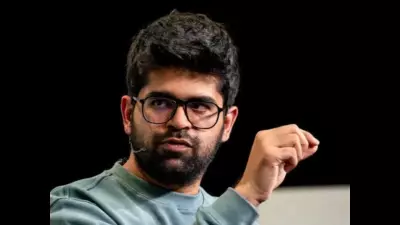
This scenario is a precursor to more complex legal and ethical challenges. As noted by commentators like Atanu Biswas, we are entering an era of "half-human, half-AI" works that will rigorously test the limits of existing copyright law. Current frameworks are ill-equipped to handle collaborative creation between a person and an algorithm, especially when the contribution is not the core content but a peripheral yet essential component.
The central question, as framed in the debate, is: Where is the lakshman rekha? Where do we draw the inviolable line that protects and privileges human creative effort from being diluted or replaced by machine-generated output?
Broader Implications for the Future of Art
The New Zealand book award controversy is not an isolated event but a sign of things to come. Institutions across the globe—from publishing houses and film festivals to music competitions and art galleries—are now compelled to draft clear policies on AI use.
The argument for shielding human creativity is strong. Proponents believe that until AI evolves into a genuinely new and distinct form of art, its use in traditional creative spheres must be regulated to prevent the devaluation of human labour and ingenuity. Awards have a duty to set standards that encourage artistic growth, not just efficient production.
Conversely, others view AI as simply another tool, akin to a camera or a word processor, that artists can use to realise their vision. The challenge lies in creating guidelines that are nuanced, distinguishing between using AI as a brush and using it as the entire painter.
The fallout from this decision will likely accelerate several key developments:

- Stricter Submission Guidelines: More awards and publications will explicitly require declarations of AI use in any part of a submitted work.
- Legal Evolution: Pressure will mount on lawmakers to update intellectual property statutes for the AI age, defining ownership and infringement in collaborative human-AI works.
- Ethical Frameworks: The creative industry will need to develop ethical best practices for transparently disclosing AI's role in artistic projects.
The disqualification of two eminent authors from the Ockham Book Awards is a watershed moment. It moves the conversation about artificial intelligence in art from theoretical discussion to practical, high-stakes enforcement. As AI capabilities grow, so too will the complexity of these cases, demanding a thoughtful, global conversation about how to honour human creativity while acknowledging the tools of a new era.