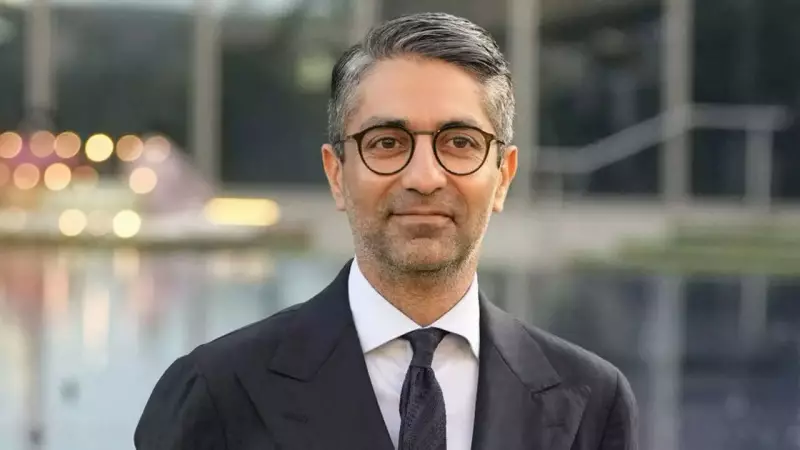
A government-appointed task force led by India's first individual Olympic gold medallist, Abhinav Bindra, has delivered a stark assessment of the country's sports administration. The panel's report, submitted to the sports ministry, concludes that the institutions forming the backbone of Indian sport suffer from severe systemic and capacity challenges.
Deep-Rooted Systemic Challenges Identified
The nine-member task force, empowered by the government and chaired by Bindra, was formed on July 30 last year. Its mandate was to design a future-ready governance system for Indian sport, with the long-term ambition of making India a top-10 sporting nation and a credible host for the 2036 Olympic Games. After extensive primary research, the panel submitted its 170-page report on Tuesday, painting a concerning picture.
The report states that key institutions like the Sports Authority of India (SAI) and state sports departments are critically understaffed and poorly coordinated. They are found to be overly dependent on generalist civil servants or short-term contractual staff who possess limited sector-specific expertise. This, the panel argues, hinders professionalism, efficiency, and overall governance effectiveness.

Lack of Framework and Professional Pathways
One of the core findings is the absence of a national framework for sports administration. "India lacks a national institute or framework for sports administration and governance, leaving administrators without clear career pathways, competency benchmarks, or professional development opportunities," the Bindra-led panel highlighted. This gap creates a cycle of ad-hoc decision-making and weak institutional memory.
The consequences are significant. These structural deficiencies not only constrain the implementation of national sports policies but also weaken crucial coordination with bodies like the Indian Olympic Association (IOA) and various National Sports Federations (NSFs). The report points to "critical shortcomings in human resource planning, deployment, and institutional capacity" across the entire ecosystem, from the ministry down to state levels.
Impact on India's Sporting Ambitions
The cumulative effect of these gaps, according to the task force, is a major "structural gap and governance challenge." This environment directly limits India's ability to build a modern, athlete-centric sports ecosystem. The current administrative setup is seen as a bottleneck, preventing the nation from systematically pursuing its lofty goals, including the bid for the 2036 Olympics.
Bindra, in his report, emphasized that these deep-rooted issues prevent India from realizing its full sporting potential. The task force's work now lays the groundwork for potential reforms aimed at professionalizing sports governance and creating a sustainable system that can support athletes and deliver on national ambitions.