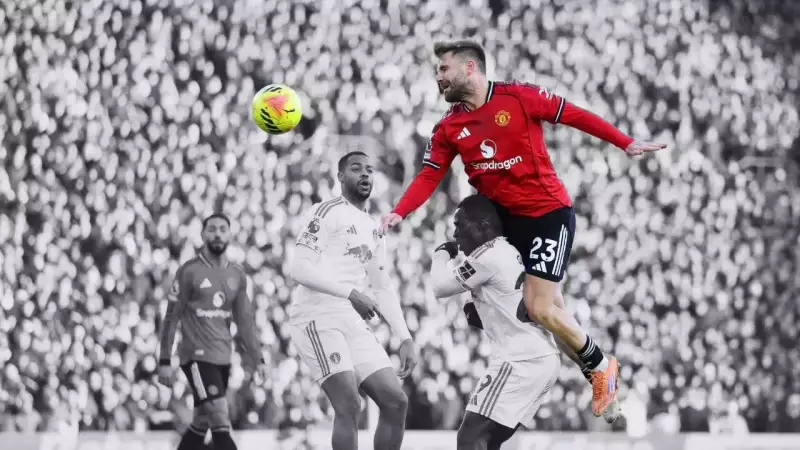
The dismissal of manager Ruben Amorim by Manchester United has starkly revealed the absence of meaningful advancement at the club, despite the promises of a fresh start that accompanied Sir Jim Ratcliffe's arrival as co-owner. Amorim becomes the latest casualty in a prolonged period of decline that has gripped Old Trafford since the legendary Sir Alex Ferguson's retirement in 2013.
A Legacy of Decline Continues
Ferguson's departure after securing the club's 20th English league title marked the end of an era defined by domestic supremacy and European glory. In the years since, despite hiring a parade of high-profile managers, United have failed to mount a serious challenge for either the Premier League or the UEFA Champions League. The 2024/25 season culminated in a disastrous 15th-place finish, the club's worst in the top flight since their relegation in 1974, and they missed out on European football for only the second time in 35 years.
The appointment of Ruben Amorim in November 2024 was seen as a bold move, bringing in one of football's most highly-rated young coaches. His sacking after just 14 months in charge makes him the first manager to be hired and fired since Ratcliffe assumed control of football operations. The British billionaire's acquisition of a minority stake in February 2024 was met with euphoria by fans weary of the Glazer family's ownership, but the early optimism has swiftly evaporated.

Broken Promises and Internal Rifts
Ratcliffe, a lifelong United fan, had publicly backed Amorim just months ago, stating the manager had a three-year project and warning against "knee-jerk reactions." However, the team's persistent struggles, including winning just one of their last five home league games, forced a dramatic U-turn. Behind the scenes, a reported clash with football director Jason Wilcox over tactics and transfer targets added to the mounting pressure on Amorim, leading to his dismissal on Monday.
The instability extends beyond the dugout. Wilcox himself only moved into his role in June last year, replacing Dan Ashworth, who lasted a mere five months—an early embarrassment for Ratcliffe's new regime. On the pitch, the club's ambitious goal of winning a 21st league title by their 150th anniversary in 2028 seems increasingly fanciful. While there has been a marginal improvement this season, Amorim left with the team 17 points behind leaders Arsenal after 20 games.
Transfer Missteps and Financial Constraints
Ratcliffe has been critical of United's past transfer business, but the signings made under his watch have yet to prove successful. Players like Joshua Zirkzee and Manuel Ugarte, brought in during Erik ten Hag's tenure, have been peripheral. Amorim was given an expensive new forward line of Benjamin Sesko, Matheus Cunha, and Bryan Mbeumo last summer, but the trio have managed only 12 Premier League goals between them so far.
Compounding these issues is a tightening financial picture. The club's ability to spend its way out of trouble is being squeezed by Financial Sustainability rules, making a return to the lucrative Champions League imperative. This commercial reality undoubtedly played a part in the decision to remove Amorim. Meanwhile, Ratcliffe's attempts to restore fiscal order have included controversial job cuts and plans to increase ticket prices, further testing the patience of a success-starved fanbase.
Off the field, grand plans for a new 100,000-seater stadium to replace Old Trafford—described by Ratcliffe as a future "world's greatest football stadium"—are ambitious but mired in uncertainty over funding and timelines. For now, the stark reality is that both on and off the pitch, Manchester United remains a club in search of a coherent direction, with Jim Ratcliffe's promised new dawn yet to break through the clouds.