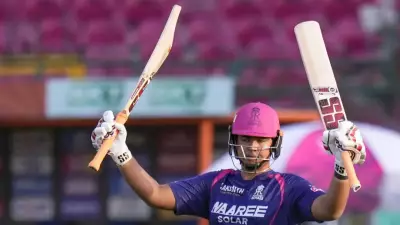
Michael Vaughan Sparks Debate Over South Africa's World Cup Strategy
Former England cricket captain Michael Vaughan has ignited a fiery discussion in the cricketing world following the conclusion of the ICC Men's T20 World Cup 2026. Vaughan has provocatively suggested that the South African national cricket team committed a significant tactical blunder during the tournament's Super 8 stage.
The Controversial Super 8 Clash at Narendra Modi Stadium
The focal point of Vaughan's argument is South Africa's match against the West Indies cricket team, which took place at the iconic Narendra Modi Stadium. South Africa secured a commanding nine-wicket victory in that encounter, a result that appeared positive on the surface but, according to Vaughan, had profound negative consequences for their own campaign.
"I tell you, who I think is the stupidest team of the tournament? South Africa," Vaughan stated emphatically during an appearance on the 'Stick to Cricket' podcast. "Because if South Africa had allowed the West Indies to beat them in the Super 8s, India would have been knocked out. I'm just saying – if they had cleared them out, the juggernaut that was coming would have stopped."

How South Africa's Victory Altered the Tournament Landscape
Vaughan's analysis centers on the domino effect created by South Africa's win. The victory allowed the Indian national cricket team to remain in contention for the semi-finals. Later on the same day, India defeated the Zimbabwe national cricket team, keeping their World Cup hopes alive and setting the stage for their eventual championship run.
"By winning that game, they allowed the juggernaut to go on," Vaughan explained. "India then beat Zimbabwe, then the West Indies in a kind of quarter-final, and then England. South Africa had to play Zimbabwe next, and they even rested three players for that match."
Vaughan's World Cup Winning Philosophy
The former England skipper elaborated on his strategic viewpoint, suggesting that teams with genuine championship aspirations should consider eliminating the strongest competitors early in the tournament rather than allowing them to build momentum.
"Look, these things shouldn't happen and usually don't happen," Vaughan acknowledged. "I'm just saying that if you want to win a World Cup, the best way is to eliminate the best team early."
The Consequences of South Africa's Decision
Following their victory over Zimbabwe, India faced the West Indies in what effectively became a knockout contest. In this high-pressure match, Sanju Samson delivered a match-winning performance, scoring an unbeaten 97 runs to guide India to a five-wicket victory. This result secured India's place in the semi-finals while simultaneously ending the West Indies' campaign.
Meanwhile, South Africa traveled to Kolkata for their semi-final encounter against the New Zealand national cricket team. Led by Mitchell Santner, the Black Caps dominated the contest, securing a comprehensive nine-wicket victory. The chase was highlighted by Finn Allen's sensational 33-ball century, which propelled New Zealand into the final.
Ultimately, India went on to win the T20 World Cup 2026, validating Vaughan's argument that South Africa's decision to defeat West Indies inadvertently cleared the path for India's championship triumph.
The Broader Implications for Tournament Strategy
Vaughan's comments have sparked broader conversations about:
- The ethical considerations of strategic match outcomes
- Whether teams should prioritize eliminating strong opponents over immediate match victories
- How tournament structures influence tactical decision-making
- The psychological aspect of allowing competitors to build momentum
While such strategic considerations remain controversial in professional sports, Vaughan's analysis provides a thought-provoking perspective on how tournament outcomes can be influenced by individual match results that may initially seem inconsequential.