Former elite umpire Simon Taufel has made a strong case for the International Cricket Council (ICC) to take direct ownership of the technological tools used in the sport, moving away from the current model where broadcasters supply and fund them. His comments, made in an interview with Cricbuzz on January 3, 2026, come in the wake of ongoing Decision Review System (DRS) debates during the Ashes series.
The Call for ICC Ownership and Accountability
The 54-year-old Australian, widely respected in the cricketing world, pointed to a critical lack of accountability under the present setup. Taufel emphasized that when third-party entities, be they technology providers or broadcasters, are involved in the decision-making chain, it becomes unclear who is ultimately responsible for errors. He contrasted this with on-field umpires, whose decisions are transparent and who own their calls.
"I’d love to see the ICC actually own technology, rather than it being supplied by the broadcasters and paid for by the broadcasters," Taufel stated. He suggested the global governing body should find a way to fund and control the technology directly. This viewpoint aligns with recent remarks from Australian fast bowler Mitchell Starc, who also questioned the lack of global uniformity in technology and suggested the ICC should foot the bill.

DRS: A Tool for Improvement, Not Perfection
Taufel provided a clear-eyed assessment of the DRS, acknowledging its limitations while defending its overall value. He admitted the system is not foolproof and does not correct every mistake, nor does it guarantee 100% accuracy. He revealed insightful statistics: players are correct with their reviews only about 25% of the time, while on-field umpires are right 92-93% of the time on average.
"What DRS does for us is raise 92-93% to 97-98%," he explained. This significant improvement, however, comes with costs—both financial and in terms of time added to the game. Taufel argued against extreme solutions, stating that neither a fully technological nor a completely human-centric approach would deliver perfection. The current hybrid model, despite its flaws, yields more correct decisions.
Advocating for the Umpire's Soft Signal
As part of his vision for a better-balanced system, Taufel expressed a desire to see the return of the umpire's soft signal for close catches and potential obstructions. He believes umpires should provide a starting point for such subjective decisions, leveraging their on-field perspective before technology is consulted. This, he feels, would restore a layer of human judgment that has been diminished.
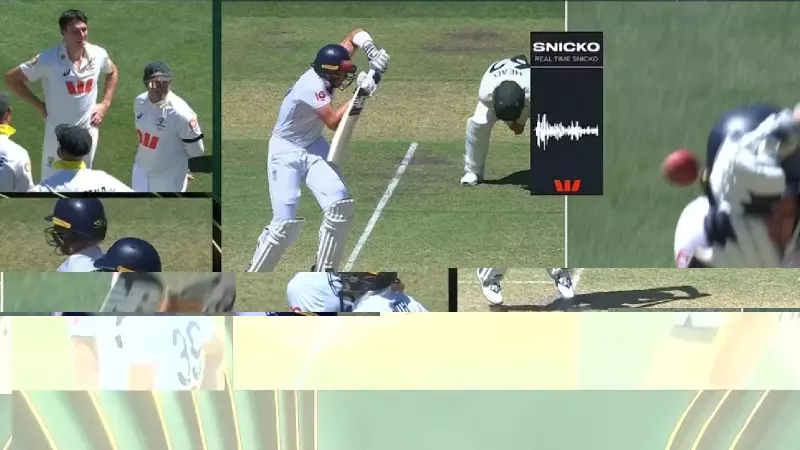
The Ashes series has been a hotbed for DRS discussions, with incidents like the reprieve for England's Jamie Smith—where Snickometer showed a spike after the ball passed the bat, sparking Australian frustration—highlighting the system's contentious nature. Taufel's intervention adds a significant voice to the conversation, pushing the agenda towards structural change where the ICC assumes greater control and responsibility for the technological aids defining the modern game.