Pakistan Considers T20 World Cup Withdrawal Amid ICC Controversy
The Pakistan cricket team's participation in the upcoming ICC Men's T20 World Cup 2026 hangs in the balance as government officials express growing frustration with what they term the International Cricket Council's "blatant double standards." According to reports emerging from Islamabad, senior government sources indicate that Pakistan may follow Bangladesh's lead and pull out of the prestigious tournament, which is scheduled to be hosted jointly by India and Sri Lanka.
Government Meeting to Decide Pakistan's Cricket Future
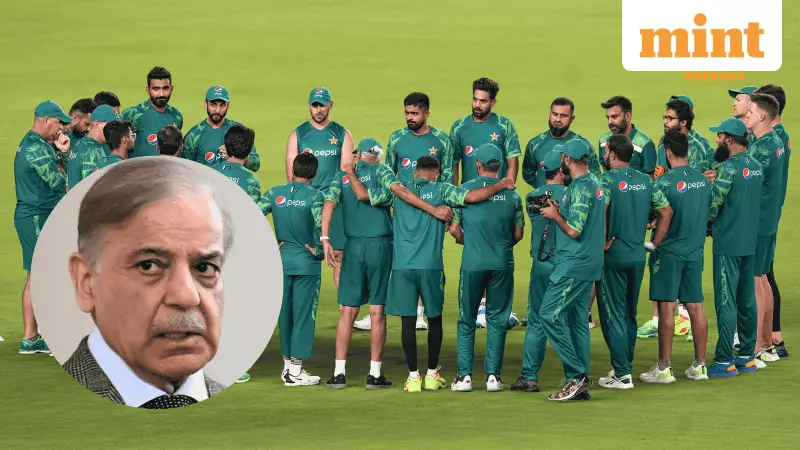
Prime Minister Shehbaz Sharif and Pakistan Cricket Board chairman Mohsin Naqvi are set to meet today, January 27, to make the final decision regarding Pakistan's participation in the global cricket event. While the ultimate authority rests with the prime minister, early indications suggest that the government may not grant permission for the PCB to send the national team to compete in the tournament that begins on February 7.
"The final decision rests with the prime minister, but early indications suggest that the government may not allow Pakistan to participate in the T20 World Cup," a senior government source revealed to Geo News. "This is not just about cricket, it is about principles. Bangladesh has been deprived of its legitimate right, and the ICC's step-motherly treatment has forced Pakistan to seriously rethink its participation."

Alleged Unfair Treatment Sparks International Cricket Crisis
The controversy stems from the ICC's recent decision to replace Bangladesh with Scotland in the tournament lineup after the Bangladesh Cricket Board refused to play matches in India. According to sources familiar with the matter, the BCB had requested either venue relocation from India or group changes, but the ICC declined to make any adjustments at the last moment.
"International sports cannot follow 'dual standards,'" the government source emphasized. "On one hand, India enjoys the liberty to choose venues at will. While, on the other, countries like Bangladesh are denied venue changes despite citing security concerns. If the ICC truly wants cricket to thrive as a global sport, such selective policies must end."
Cricket Board and Players Align with Government Position
PCB chairman Mohsin Naqvi has previously expressed strong disappointment over the ICC's decision regarding Bangladesh, stating that replacing the Asian team with Scotland weakened the fundamental principle of fairness in global cricket. However, Naqvi has clarified that the cricket board would fully comply with whatever directive comes from the Pakistan government, acknowledging that the final decision rests with political authorities rather than sporting bodies.
This position has received unanimous support from Pakistan's players, who gathered in Lahore recently and agreed that any decision regarding participation or withdrawal should strictly align with the government's official stance on the matter.
International Cricket Community Voices Concerns
The controversy has drawn criticism from prominent figures in the cricket world, including former Australian cricketer Jason Gillespie, who previously served as Pakistan's coach. Gillespie publicly questioned the ICC's decision-making process, particularly comparing the treatment of Bangladesh with how India's concerns were handled during the Champions Trophy 2025 planning.
"Has there been an explanation from the ICC why Bangladesh could not play their games outside of India?" Gillespie wrote in a now-deleted social media post. "From memory, India refused to play Champions Trophy matches in Pakistan and they were allowed to play those games outside of Pakistan. Can someone make this make sense?!?!"
This comparison highlights what many see as inconsistent application of rules within international cricket governance, with different standards apparently applied to different cricket-playing nations based on their geopolitical influence and relationships.
Broader Implications for Global Cricket Governance
The potential withdrawal of Pakistan from the T20 World Cup represents more than just a sporting decision—it reflects growing tensions within international cricket administration. The situation raises fundamental questions about:

- The consistency of ICC policies across member nations
- The balance between security concerns and tournament logistics
- The influence of geopolitical relationships on sporting events
- The future of multi-nation cricket tournaments in politically sensitive regions
As the cricket world awaits Pakistan's final decision, the controversy underscores the complex intersection of sports, politics, and international relations that increasingly characterizes global sporting events. The outcome of today's high-level meeting in Islamabad could have far-reaching consequences for the upcoming tournament and potentially reshape power dynamics within international cricket governance for years to come.