India-Pakistan T20 World Cup Clash Ends Without Handshake, Continuing Asia Cup Standoff
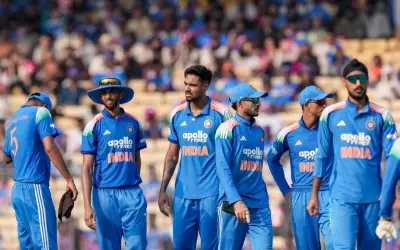
The highly anticipated T20 World Cup match between arch-rivals India and Pakistan in Colombo concluded with a commanding victory for India, but also with a notable absence of sportsmanship. For the second consecutive major tournament, players from both sides did not exchange handshakes after the contest, continuing the frosty standoff that began during last year's Asia Cup in Dubai.
Pre-Match Anticipation and Post-Match Reality
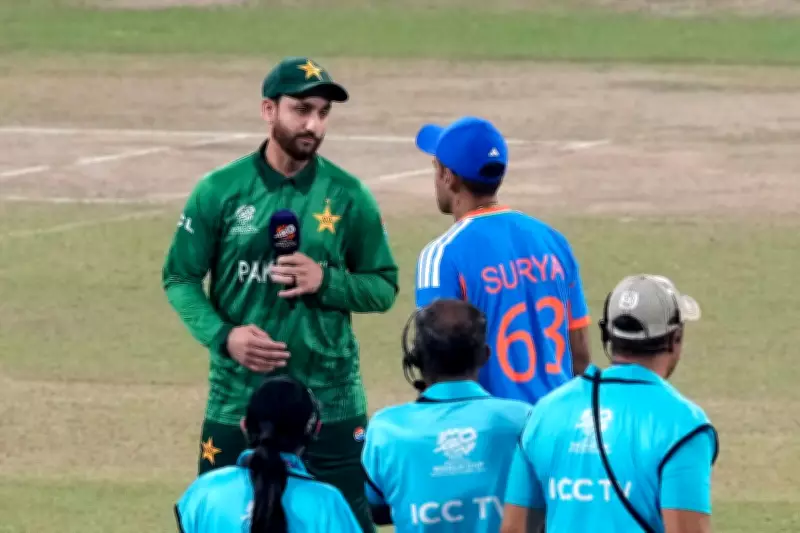
On the eve of the match, Indian batsman Suryakumar Yadav had cryptically stated, "I will break the suspense tomorrow. Wait for 24 hours." Twenty-four hours later, the message became clear and unambiguous. There would be no traditional post-match handshakes between the teams. The tension was evident not only during the toss but throughout the match proceedings, culminating in the same protocol observed during their Asia Cup encounters last September.
India's Dominant Batting Performance
India produced a commanding performance after being asked to bat first on a challenging surface. Opener Ishan Kishan delivered a spectacular innings, scoring a supersonic 77 runs off just 40 balls to power India to a competitive total of 175 for seven. Kishan dominated the Pakistani attack from the outset, sharing an 87-run partnership with Tilak Varma, who contributed 11 runs to the stand.

The match began unusually with Pakistan captain Salman Ali Agha bringing himself on for off-spin in the very first over. The move paid immediate dividends as he dismissed Abhishek Sharma, who holed out to Shaheen Shah Afridi. Saim Ayub, who finished with impressive figures of 3 for 25, and Agha maintained pressure during the powerplay overs.
Kishan, however, single-handedly turned the tide of the innings. He pulled Afridi for a towering six and then dismantled the Pakistani spinners with precision. Abrar Ahmed and Shadab Khan were struck for boundaries and sixes as Kishan raced to a fifty in just 27 balls. He eventually fell trying to carve Ayub over mid-wicket, missing the ball and losing his stumps.
Pakistan clawed back through Ayub, who removed Tilak Varma and Hardik Pandya off successive deliveries, leaving India at 126 for four. Suryakumar Yadav contributed 32 runs off 28 balls, while Shivam Dube added a quickfire 27 off just 17 deliveries. A 15-run final over from Afridi, in which Dube and Rinku Singh attacked aggressively, carried India to their final total of 175 for seven.
India's Bowling Masterclass
In reply, India's bowlers never allowed Pakistan to settle into any rhythm. Hardik Pandya struck in the very first over, dismissing Sahibzada Farhan for a duck. Jasprit Bumrah followed with a double strike, removing Saim Ayub and Salman Agha as Pakistan slumped to 13 for three.
Axar Patel bowled Pakistani captain Babar Azam and later dismissed Usman Khan, who top-scored with 44 runs off 34 balls. A brief 39-run partnership between Usman and Shadab Khan offered some resistance before another collapse set in.
Varun Chakravarthy claimed two crucial wickets in the 16th over, and Hardik Pandya returned to take the final wicket as Pakistan were bowled out for just 114 runs in the 18th over. The bowling effort was a collective masterpiece with Hardik, Bumrah, Axar, and Varun each taking two wickets, while Kuldeep Yadav and Tilak Varma picked up one wicket apiece.
The Continuing Standoff
The absence of post-match handshakes between the teams has become a recurring theme in recent India-Pakistan encounters. This protocol, which began during the Asia Cup last year, continued unabated in Colombo despite India's comprehensive 61-run victory. The frost between the two cricketing giants remains evident both on and off the field, adding another layer of tension to one of sports' most intense rivalries.
While the cricketing action provided plenty of excitement with India's dominant performance, the post-match proceedings highlighted the ongoing diplomatic and sporting tensions between the neighboring nations. As both teams prepare for their remaining World Cup fixtures, the question remains whether this handshake protocol will continue in future encounters or if traditional sportsmanship will eventually prevail.