The first ODI between India and New Zealand in Hyderabad has reignited a familiar debate within Indian cricket circles: what is the ideal batting position for the versatile KL Rahul? Following India's 12-run victory, former all-rounder Reetinder Singh Sodhi offered his expert analysis on the matter, providing clarity on Rahul's evolving role in the team setup.
The Hyderabad Innings and the Positional Puzzle
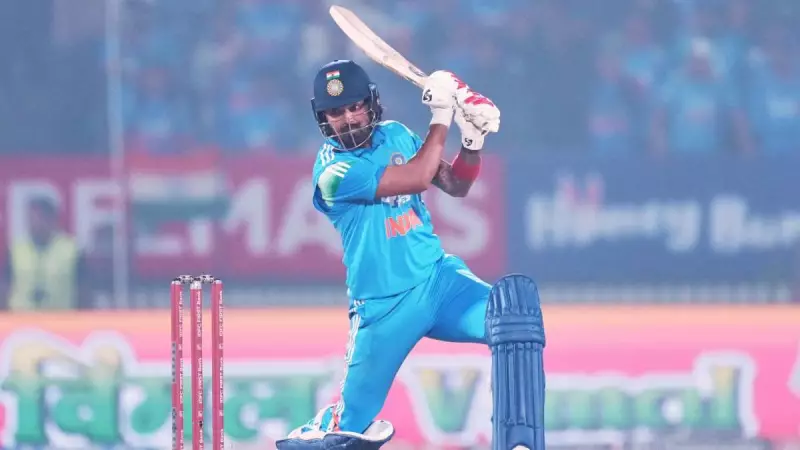
In the series opener at the Rajiv Gandhi International Stadium, KL Rahul walked out to bat at number five. He scored a valuable 39 runs off 29 balls, an innings that included four boundaries and a six. His partnership with Shubman Gill, who scored a magnificent double century, was crucial in propelling India to a formidable total of 349 for 8. While his contribution was significant, it once again prompted questions about whether the team is utilizing his full potential at that spot in the batting order.
The match took place on Wednesday, January 18, 2023. India's bowlers, led by Mohammed Siraj's 4 for 46, successfully defended the total, bowling New Zealand out for 337. Despite the win, the discussion around Rahul's batting slot continued, highlighting its importance to the team's long-term strategy.

Reetinder Singh Sodhi's Expert Verdict
Weighing in on the debate, former India cricketer Reetinder Singh Sodhi presented a balanced perspective. He acknowledged the complexity of the situation, given Rahul's proven skills as an opener and his recent performances in the middle order. Sodhi emphasized that the team's combination and the specific match situation should dictate Rahul's position.
Sodhi explained that with Rohit Sharma and Shubman Gill firmly established as the first-choice openers, Rahul's opportunity at the top is currently limited. This reality has necessitated his move down the order. The former cricketer pointed out that Rahul has adapted remarkably well to this role, often providing stability and firepower in the middle overs, a trait vital for modern ODI cricket.
"The team management has found a suitable role for him in the middle order, and he has executed it with considerable success," Sodhi noted. He stressed that Rahul's technical proficiency and ability to rotate strike make him a perfect candidate for the number five position, especially when the team needs to rebuild or accelerate in the latter stages of an innings.
Flexibility: Rahul's Greatest Asset
A key point in Sodhi's analysis was the immense value of Rahul's flexibility. In a world where injuries and form slumps are common, having a player of his caliber who can seamlessly slot into multiple positions is a luxury for any captain and team management. This adaptability strengthens the overall squad depth and provides strategic options during a long tournament or a series.
Sodhi also touched upon the context of the upcoming 2023 ICC Cricket World Cup, scheduled to be held in India later this year. He suggested that a settled middle order, with Rahul playing a defined role, could be more beneficial for the team's championship aspirations than constantly shuffling him up and down the lineup. Consistency in role often leads to consistency in performance.
Conclusion: A Problem of Riches
The discussion around KL Rahul's batting position ultimately underscores a positive challenge for Indian cricket: an abundance of top-order talent. While purists may argue that a player of his classical technique should face the new ball, the practical demands of team balance have carved a new niche for him.
Reetinder Singh Sodhi's insights conclude that for the current team dynamics, KL Rahul is most valuable as a middle-order linchpin. His innings in Hyderabad, though not a massive score, demonstrated the intent and skill required for that role. As India continues its preparations for major global events, Rahul's ability to master this position could be one of the defining factors in the team's batting success. The debate may persist, but the evidence increasingly points towards a permanent middle-order future for the Karnataka batsman.