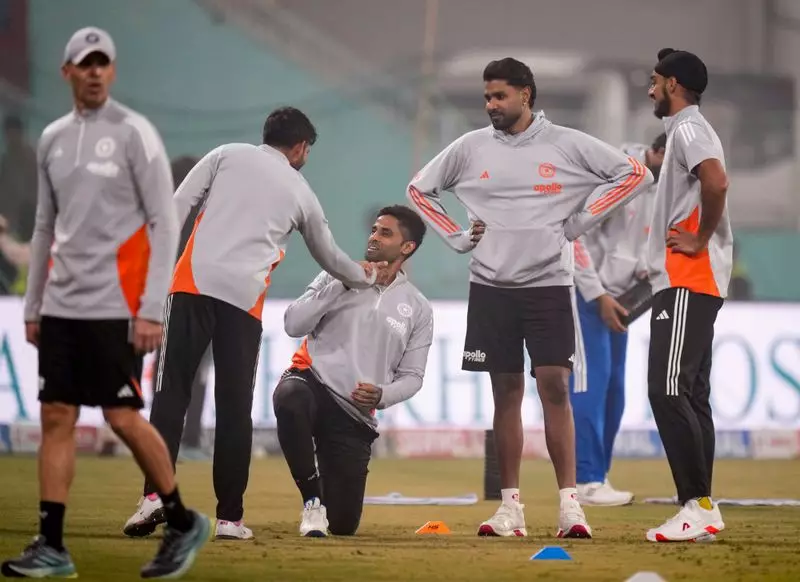
The fourth and final T20 International match between India and South Africa at the Bharat Ratna Shri Atal Bihari Vajpayee Ekana Cricket Stadium in Lucknow on Friday faced an unexpected hurdle. The all-important toss was delayed due to poor visibility caused by dense fog enveloping the ground.
Weather Plays Spoilsport in Series Decider
The match, a crucial series decider with the five-match series tied at 2-2, was scheduled for a 7:00 PM IST start. However, the playing conditions were not deemed suitable by the match officials at the scheduled toss time. The on-field umpires, KN Ananthapadmanabhan and Virender Sharma, along with match referee Javagal Srinath, decided to hold off the toss after inspecting the ground. The primary concern was the thick fog, which severely reduced visibility for players, particularly fielders stationed in the outfield and for the batters facing high-paced deliveries.
This delay added another layer of drama to an already highly anticipated clash. The Indian team, led by Rishabh Pant, was looking to clinch the series after fighting back from a 2-0 deficit. The South African side, under the captaincy of Keshav Maharaj, aimed to secure a historic series win on Indian soil.

Stadium and Context of the Match
The venue for this encounter was the Ekana Cricket Stadium in Lucknow. The series has been a roller-coaster, with the first game in Delhi washed out without a ball bowled. South Africa then took a strong 2-0 lead with victories in Cuttack and Visakhapatnam. India made a stunning comeback in the third T20I in Rajkot, winning by a massive 48-run margin to level the series 2-2, setting up a perfect finale in Lucknow.
Fans who had gathered at the stadium and millions watching from home were left waiting as the officials continued to monitor the weather. The ground staff were present, but the delay was purely due to the atmospheric conditions beyond anyone's control. The Indian cricket board (BCCI) and Cricket South Africa officials were in close consultation with the match officials during this period.
Implications and Next Steps
A delayed toss inevitably leads to a shortened match. According to ICC playing conditions, for a T20I to constitute a complete match, a minimum of 5 overs per side is required. The match officials had the complex task of calculating the latest possible start time to allow for a full 20-over contest. Every minute of delay eats into the playing time, increasing the likelihood of a reduced-overs game.
The weather interruption posed a significant challenge for both teams' strategies. Captains Rishabh Pant and Keshav Maharaj had to keep their plans flexible, as the conditions and potential match length could change rapidly. A shortened game often becomes a high-risk, high-reward lottery, favoring the team that adapts quicker. Furthermore, the fog and any associated moisture could affect the behavior of the pitch and the cricket ball, adding another variable for the players to consider.
This incident in Lucknow highlights how environmental factors can impact major sporting events. While rain is a common disruptor in cricket, fog is a less frequent but equally disruptive phenomenon, particularly in certain Indian cities during specific seasons. The authorities at the Ekana Stadium had all other arrangements in place, but the weather proved to be the one element they could not manage.
Ultimately, the patience of players, officials, and fans was tested as they awaited a clear improvement in visibility to commence the series-deciding battle.