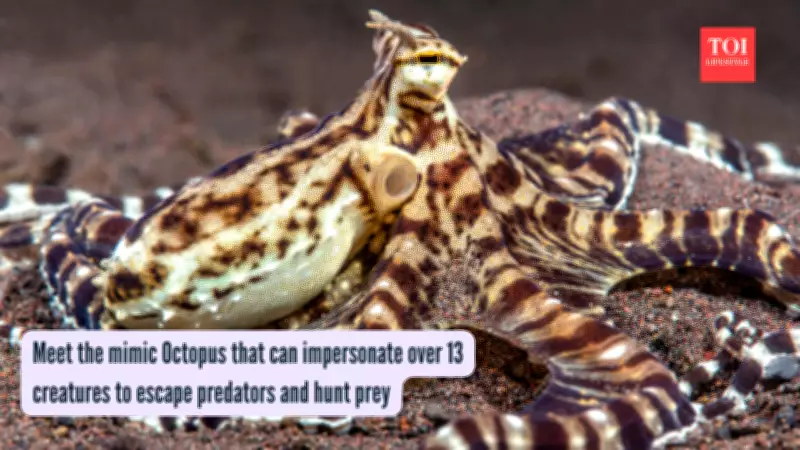
Nature has incredible creatures that never cease to amaze us with their wild survival tricks and unimaginable capabilities. One such creature is the octopus, and the one-of-a-kind mimic octopus takes cleverness to a whole new level.
If you have ever watched a spy movie, imagine that quick and smart creature but underwater, with tentacles. These octopuses are not just living in the ocean; it is like they are making their own thriller movie.
Master of Disguise: The Mimic Octopus
This soft-bodied creature cruises through open sandy flats, dodging sharks and big fish not by hiding in rocks, but by camouflaging itself into the surroundings like nature's own master of disguise, switching looks faster than you can blink. Without any bones, just muscle and magic, its skin lets it reshape and recolor whenever it wants.

The mimic octopus lives in sandy tropical spots like muddy estuaries where cover is scarce and eyes are everywhere. According to a 2007 study published in the Biological Journal of the Linnean Society, this smart move of hiding in plain sight helps it while hunting crabs and fish during daylight. With no places to hide in its bare habitat, it stays exposed and directly hunts over larger fish or even bigger octopuses and squid.
It Can Perform 13+ Mimicries
The mimic octopus is a versatile bag of tricks. Unlike animals stuck with one disguise, it masterfully switches between 13 or more impersonations. According to the study, it can copy the appearance of slithering sea snakes, spiky lionfish, or floppy flatfish, copying the exact body shape, skin patterns, and swimming style each time for total believability. The octopus smartly chooses its costume based on the danger, like dragging striped arms to look like a venomous sea snake and freak out pushy damselfish, or squishing flat to look like a harmless-but-avoided flatfish when bigger fish lurk. It can also look like fluid impressions of jellyfish with pulsing arms, shrimp, or sea anemones with waving tentacles to create confusion and slip away.
How Does a Mimic Octopus Change Appearance Instantly?
Chromatophores, or tiny pigment sacs in its skin, help it flash colors using muscle sacs, while papillae, or mini muscles, help raise or lower skin texture when required from smooth to spiky. A 2021 Matter study explains how reflective cells and hydrostatic muscles change the shape of the arms and mantle for 3D illusions. No rigid skeleton means total flexibility; arms can coil, flatten, or spike to nail the act, all working together to help fool predators.