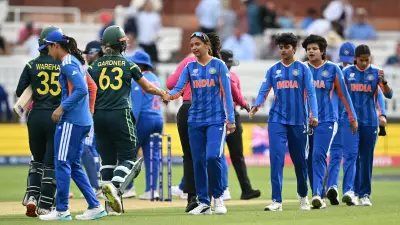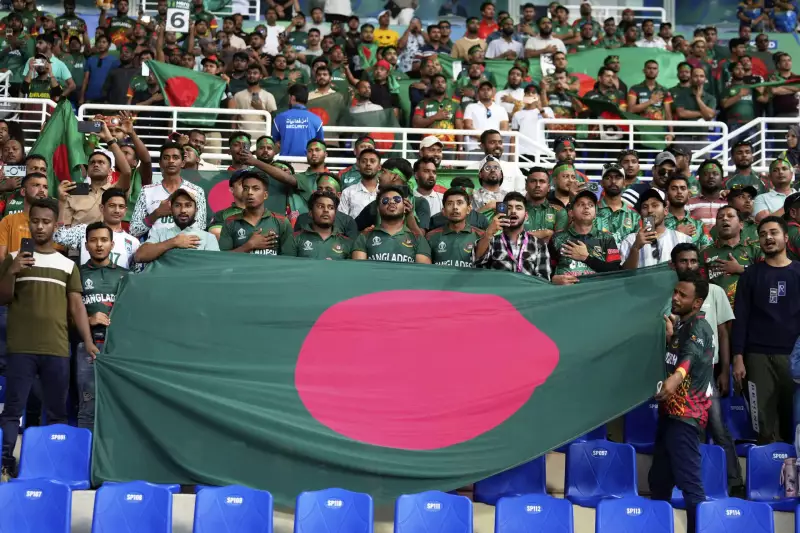
In a significant escalation, the Bangladesh government has taken a firm stance against playing its ICC T20 World Cup matches in India. The administration has declared that its participation in the global tournament is non-negotiable if it compromises the nation's dignity or the safety of its players and citizens.
Government Takes a Hard Line on Security and Dignity
The strong position was articulated by the government's sports advisor, Asif Nazrul, following a crucial meeting with Bangladesh Cricket Board (BCB) directors on Wednesday. Nazrul stated that Dhaka will formally urge the International Cricket Council (ICC) to relocate all of Bangladesh's scheduled matches to the co-host nation, Sri Lanka.
This demand comes after the ICC responded to Bangladesh's initial request for a venue change. The request itself was triggered by a recent incident involving fast bowler Mustafizur Rahman. The Board of Control for Cricket in India (BCCI) instructed his Indian Premier League (IPL) franchise, Kolkata Knight Riders, to release the player, which raised immediate and serious security alarms within the Bangladesh camp.

"We sat together with the BCB directors – Bulbul bhai, Faruque bhai and everyone else. Today we discussed the situation and we all agreed that Bangladesh earned qualification for the T20 World Cup through hard work. We are a cricket-crazy nation and we definitely want to play," Nazrul informed journalists. However, he added a critical caveat: "We do not want to play the World Cup at the cost of national humiliation, at the cost of the security of our cricketers, spectators and journalists, or at the cost of the country’s dignity."
Beyond Security: A Question of National Honour
Nazrul expressed deep dissatisfaction with the ICC's understanding of the crisis. He indicated that the global body's written response failed to grasp the gravity of the security situation for Bangladeshi nationals in India. He framed the issue as not merely about safety but also about national pride.
"To me, it does not feel like only a security issue – it feels like an issue of national humiliation as well," Nazrul asserted. "When the Indian cricket board itself is telling a team that they cannot provide security to this player and asking them to drop him, that alone shows there is no environment in India where it is safe to play."
He laid out Bangladesh's non-negotiable position in clear terms: "We want to play cricket, we want to play the World Cup, and since there is another host country, Sri Lanka, we want to play there. We are firm on this position. On the question of Bangladesh’s security, honour and dignity, there will be no compromise." A detailed follow-up letter will be sent to the ICC shortly, with Bangladesh's future actions hinging on the response.
BCB Backs Government, Dismisses Relocation Rumors
The Bangladesh Cricket Board's leadership has fully aligned with the government's concerns. BCB president Aminul Islam emphasized that the security worries extend far beyond the players on the field.
He highlighted the challenge of ensuring safety for a larger ecosystem, including journalists, sponsors, and traveling fans. "Ensuring security for everyone is not possible for the board alone," Islam noted. He also dismissed media reports suggesting the ICC had already rejected the proposal to move matches to Sri Lanka, labeling such claims as "propaganda."
The standoff presents a major logistical and diplomatic challenge for the ICC with the T20 World Cup approaching. Bangladesh's hardened stance, citing concrete incidents like Mustafizur Rahman's IPL exit, puts significant pressure on the global governing body to address what Dhaka perceives as a fundamental threat to its team's safety and the nation's esteem.