Tiger Woods DUI Arrest: Police Bodycam Footage Reveals Opioid Pills and Signs of Impairment
What began as a single-vehicle crash on a quiet Florida road has escalated into a serious legal situation for golf legend Tiger Woods. Newly released police body camera footage from the Martin County Sheriff's Office provides a stark look at the moments immediately following the accident on Jupiter Island, revealing concerning details about Woods' condition.
The Crash and Initial Police Response
According to official reports, the 50-year-old athlete crashed his SUV on Friday while attempting to pass another vehicle on a two-lane residential road. The incident caused his vehicle to roll onto its side, forcing Woods to crawl out of the wreckage. In the bodycam video, Woods is seen kneeling on the roadside, appearing dazed, sweating heavily, and struggling to maintain alertness as officers check on him.
"I looked down at my phone, and all of a sudden... boom!" Woods told an officer during the encounter, explaining that he had struck the back of a trailer while trying to overtake. Police later noted in their arrest report that Woods admitted he was also changing the radio at the moment of impact.

Signs of Impairment and Opioid Discovery
As officers continued their investigation, they documented multiple troubling indicators. Woods' eyes were described as bloodshot and glassy with significantly dilated pupils. During a search, police discovered two pills marked "M367" in his pocket—medication containing hydrocodone, a powerful opioid painkiller that the National Institute on Drug Abuse identifies as highly addictive.
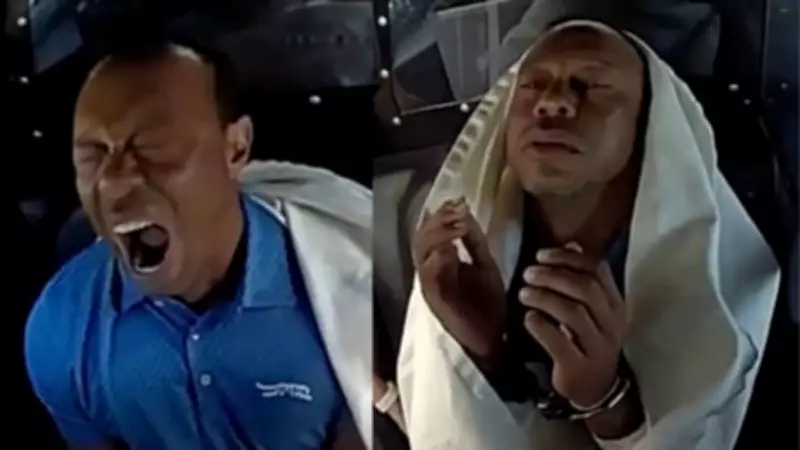
Further footage filmed inside the police car shows Woods appearing extremely subdued during transport. He yawns repeatedly, struggles with hiccups, and briefly falls asleep, speaking very little throughout the ride.
Field Tests and Official Statements
Martin County Sheriff John Budensiek told reporters that Woods exhibited "limping and stumbling" during field sobriety tests. "He showed signs of impairment," Budensiek stated, adding that officers believed some form of medication likely affected his driving ability. Woods submitted to a breath test that showed no alcohol in his system but refused to provide a urine sample.
The sheriff also revealed that Woods was driving at high speed in a 30 mph residential zone while attempting to pass a pressure cleaning truck, though officials could not confirm his exact velocity at the time of the crash.
Legal Charges and Historical Context
Woods was arrested and charged with driving under the influence, property damage, and refusal to take a urine test. This incident echoes a similar 2017 episode where Woods was found asleep behind the wheel, which he later attributed to a combination of prescription medications.
The release of this footage has raised significant questions about the circumstances surrounding the crash and Woods' condition that day. Former President Donald Trump, commenting on the situation in Miami, expressed sympathy: "I feel so badly. He's got some difficulty. Very close friend of mine. He's an amazing person. Amazing man. But, some difficulty!"
As the legal process unfolds, this case highlights ongoing concerns about impairment behind the wheel and the challenges public figures face when dealing with prescription medications.