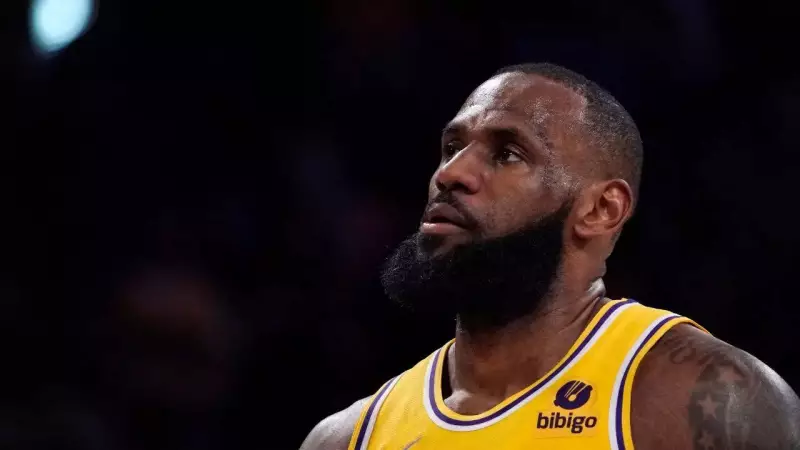
The enduring debate about the cultural impact of basketball legends Michael Jordan and LeBron James has been reignited, this time spilling over from the court into the world of sneakers and hip-hop. The controversy began when powerful sports agent Rich Paul, the longtime representative of LeBron James, made comments that seemed to downplay the direct influence of Michael Jordan on the iconic status of his Air Jordan sneaker line.
Rapper Cormega's Fiery Rebuttal
Among the most vocal responses came from veteran New York rapper Cormega, who stepped outside his usual domain to deliver a sharp critique of Rich Paul's perspective. Cormega took to Instagram to share a detailed statement, directly challenging the narrative that Air Jordan sales were driven more by street credibility than by admiration for Jordan himself.
"I usually don’t do this but I have to," Cormega wrote. "This guy says people didn’t buy Michael Jordan sneakers because of Jordan. He said they wanted Jordan’s because dope boys wore them. I respectfully disagree."

The rapper then meticulously outlined Jordan's rise to prominence, pointing to his achievements well before his NBA superstardom. He highlighted Jordan's NCAA championship run, his dominant Olympic performance, and his electrifying early years in the NBA. Cormega argued that each new sneaker silhouette was intrinsically linked to historic on-court moments, from playoff battles to championship victories, creating a direct connection between performance and consumer desire.
What Exactly Did Rich Paul Say?
The initial spark for this online firestorm came during Rich Paul's appearance on a podcast with Max Kellerman. While discussing branding, timing, and influence, Paul presented a nuanced view of the Air Jordan phenomenon. He suggested that while many fans bought the sneakers to emulate Michael Jordan, a significant portion was influenced by the lifestyle image of those who wore them in popular culture.
"People didn't buy MJs because they wanted to be like Michael Jordan. That was half of the people," Paul stated. "You know what the other half was? They wanted to be like Max, who had the BMW and the cute girl, and who had on the Michael Jordans."
Paul also credited the immense marketing power of partners like Nike and Gatorade for building the Jordan Brand into a global empire. He pointed to strategic storytelling and media placement as key factors. Although Paul later clarified that he did not intend to diminish Jordan's legacy, his comments struck a nerve with a generation of fans who view Jordan's influence as unparalleled.
A Legacy Beyond the Court
In his rebuttal, Cormega emphasized the universal and enduring nature of Michael Jordan's appeal. He stressed that Jordan's influence transcended age groups, cultures, and genders, noting his presence in movies, music, and global events. For Cormega and many who reacted online, Jordan's cultural force was built on a simple, powerful formula: exceptional performance created belief, and that belief, in turn, created unprecedented demand.
The strong reaction from figures like Cormega underscores how deeply Michael Jordan's legacy is woven into the fabric of global sports and street culture. It highlights a generational divide in how influence is perceived and confirms that discussions about Jordan's impact, whether on-court or in sneaker culture, remain as potent as ever.