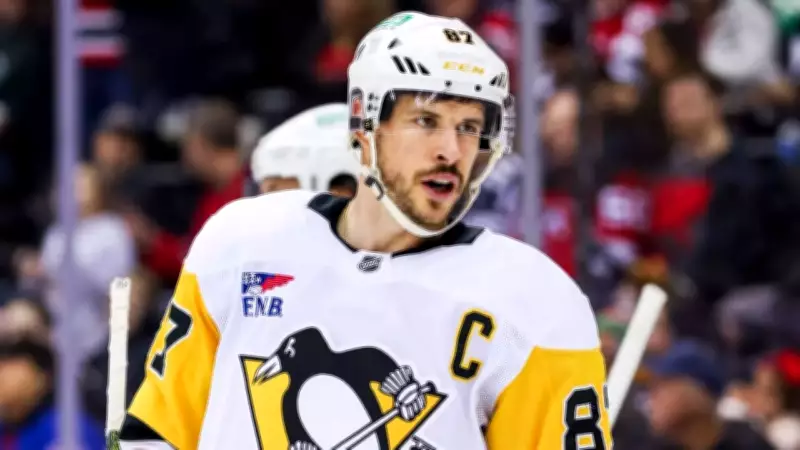
Sidney Crosby's Legacy Perspective Reshapes Olympic Puck Debate
Sidney Crosby did not need to physically touch the puck to profoundly influence the ongoing conversation surrounding it. The legendary hockey star finds himself at the center of a fresh Olympic debate, even as Jack Hughes' golden moment continues to create ripples across the sport. This discussion emerges amidst broader global tensions, including reports on the Israel-Iran conflict, where the United States targeted Iranian missile sites near the Strait of Hormuz, and Iran responded with cluster bombs on Tel Aviv, alongside diplomatic shifts such as Qatar expelling Iranian military attachés after strikes on energy facilities.
The Golden Moment and Its Aftermath
The United States secured a dramatic 2-1 overtime victory over Canada in the Milano-Cortina Olympics, ending a 45-year wait for gold, with Hughes delivering the decisive strike. Yet, long after the celebrations have faded, it is Crosby's composed and insightful perspective that is now guiding how that pivotal moment is remembered and interpreted within the hockey community.
From Simple Request to Layered Discussion
What began as a straightforward request has evolved into a more nuanced and layered dialogue. Hughes has expressed a desire to reclaim the gold medal puck, a personal piece of history currently housed in the Hockey Hall of Fame. In contrast, Crosby sees no necessity to revisit the issue in such a manner. His thoughtful response has added significant depth to the discussion, effectively shifting the focus from mere ownership to deeper meaning, and from personal memory to enduring legacy.

Contrasting Views on the Puck's Significance
The question appears simple on the surface: who should retain possession of the puck that decided an Olympic final? For Hughes, the answer is deeply rooted in family connections and personal history. He has openly shared his motivations, stating, "When I look back in time in my career, I don't collect too many things for myself, but my dad's a monster collector for the three of us. I know he would have a special place for it." For him, it is less about ownership and more about maintaining a tangible link to a career-defining achievement, bringing that moment closer to home.
Crosby, however, offers a distinctly different lens, shaped by years of bearing the weight of the game's greatest expectations. "I didn't even think about it that way, to be honest with you," Crosby told The Athletic. "I was just happy that I scored the goal. I was happy that the puck was going to the Hall of Fame. I didn't even think about it that way." This contrast highlights his focus on the experience and the broader significance rather than the physical artifact.
Timing and Broader Implications
This debate arises at an intriguing juncture. Crosby is poised to return for the Pittsburgh Penguins against the Carolina Hurricanes after missing games due to a lower-body injury sustained during the Olympics. His on-ice presence remains crucial, with 59 points in 56 games this season, demonstrating his ability to drive pace and influence outcomes in high-pressure situations where games hinge on minute details.
Yet, his words in this context carry a different kind of weight. Penguins fans and observers will recognize this characteristic tone; Crosby has never relied on keepsakes or memorabilia to define his illustrious career. For him, the true meaning resides within the moment itself, not in any associated object.
Reframing the Narrative
For Canadian fans, Hughes' goal may still evoke a sense of disappointment, a reality that remains unchanged. However, Crosby's response helps steer the conversation away from potential resentment or divisiveness. It reframes the puck not as a mere prize to be claimed by an individual, but as a symbol already shared by the entire hockey community and preserved in the Hall of Fame for public appreciation.
While Hughes may continue to hope for eventual possession of the puck, Crosby appears content in the knowledge that he never required such a tangible reminder to validate his achievements or legacy. This perspective underscores a broader philosophy where legacy is built on actions and memories rather than physical tokens.