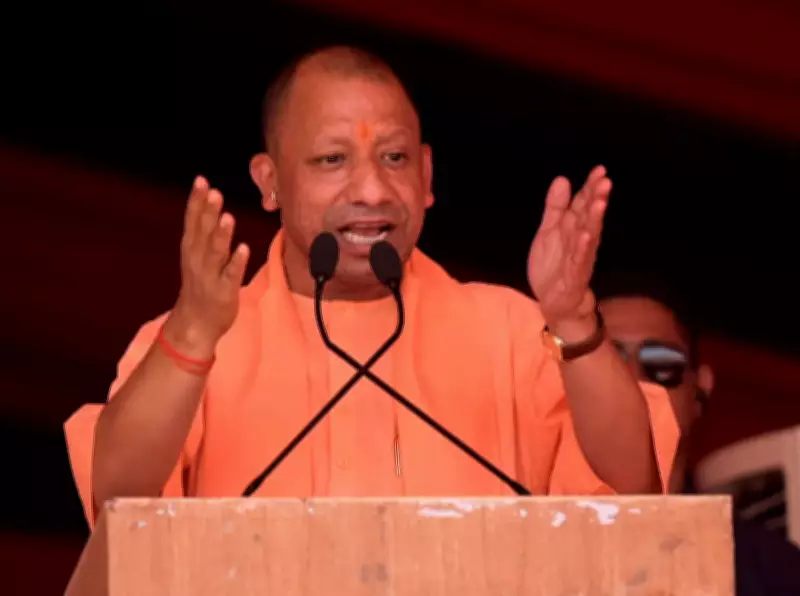
Lucknow: Chief Minister Yogi Adityanath on Monday revealed that the loss of life and property during the May 13 storm and squall was the result of a lack of proactive engagement from the local administration, even though the weather and early warning systems worked properly. Yogi made the statement at a program in Lucknow marking the upgradation of the Lucknow Meteorological Centre into a Regional Meteorological Centre. He emphasized the crucial role of accurate weather forecasting in protecting lives, supporting farmers, and mitigating the impact of natural disasters. Union Minister of State for Science & Technology and Earth Sciences, Dr. Jitendra Singh, was present on the occasion.
Consequently, during a subsequent video conference with officials across the state, Yogi recalled that he had emphasized that upon receiving an alert, authorities must immediately warn people and organizations at the local level. When another disaster struck four or five days later, alerts were successfully sent to everyone's mobile phones three hours in advance.
Lightning Risk and Reduction in Fatalities
The Chief Minister highlighted that districts such as Mirzapur, Sonbhadra, and Chandauli face a high risk of lightning strikes, which previously claimed 100 to 150 lives annually. He recalled an incident four or five years ago when 90 people died in a single day across the region stretching from Prayagraj to Patna—comprising 30 fatalities from Uttar Pradesh and 60 from Bihar. Following this, he questioned officials from the NDRF, SDRF, MDMA, and the India Meteorological Department about who would prevent such tragedies and whether technology could be utilized for this purpose. The departments said it was possible.

The implementation of the early warning system, he noted, has resulted in a drastic reduction in annual fatalities in these districts, bringing the figure down to just around a dozen. He added that people should not be negligent during such weather conditions and must remain vigilant.
Improvements in Weather Forecasting
Yogi said significant improvements have been made in weather forecasting over the past 12 years, enabling authorities to issue timely alerts and reduce losses caused by extreme weather events. Twelve years ago, the actual weather conditions often contradicted the forecasts regarding rainfall, excessive rain, drought, or lightning risks; today, however, we are receiving accurate weather information. Mobile alerts issued three hours before the disaster have proven effective.
Averted Tragedy at Shakumbhari Devi Temple
Recalling an incident at the revered Shakumbhari Devi Temple in Saharanpur, he said timely weather warnings helped avert a major tragedy when heavy rainfall occurred in the Shivalik Hills near Dehradun during a religious gathering at the temple. “People were shifted to safer locations in time, preventing what could have resulted in dozens of deaths,” he recalled.
Climate Change and Agriculture
Highlighting the growing challenges posed by climate change, Adityanath said that seasonal patterns have shifted by nearly a month, affecting the traditional weather cycle. He warned that if such changes continue unchecked, the world could face a severe food crisis in the future. “We have exploited nature for our own interests, and the consequences are now visible through changing climate patterns,” the Chief Minister said, stressing that the establishment of a Regional Meteorological Centre in Uttar Pradesh would greatly benefit the state’s agriculture sector.
Noting that Uttar Pradesh possesses only 11% of the country’s cultivable land but contributes around 21% of India’s food grain production, he said timely and accurate weather information is essential for farmers. “If we fail to provide farmers with advance information about rainfall and weather conditions, we will not be able to do justice to our farmers,” he remarked.
Satellite and Insurance Schemes
Yogi said that he once requested the Indian Space Research Organisation to help the state acquire its own satellite for more precise weather monitoring and forecasting. Referring to fatalities caused by lightning strikes, he said the state government provides financial assistance through disaster relief funds and extends support under the Chief Minister Farmers’ Accident Insurance Scheme.