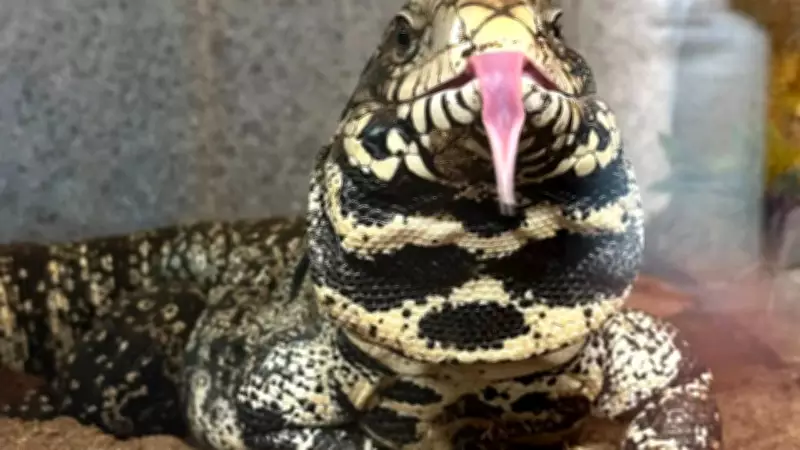
In southeastern Georgia, wildlife officers are fielding a steady stream of reports: large, black-and-white lizards moving through yards, wetlands, and field edges. The sightings are concentrated in Toombs and Tattnall counties, but the concern is no longer local. The Argentine black-and-white tegu in Georgia has shifted from a handful of verified encounters to a coordinated containment effort involving state agencies, university researchers, and federal mapping systems. Officials aren’t just asking residents to report what they see; they are asking some to trap and kill the animals under specific guidance. This rare escalation signals how quickly an invasive species can outpace early control efforts.
What Makes This Situation Unusual
The rapid integration of this species into monitoring datasets since initial reports around 2018 is striking. The Argentine black-and-white tegu (Salvator merianae) is native to parts of South America, including Brazil, Paraguay, Uruguay, and Argentina. It is a generalist omnivore with a flexible diet: eggs, small vertebrates, insects, fruit, carrion, and even human-associated food sources like pet feed or chicken eggs. As reported by The New York Post and EDD Maps, adult tegus can reach roughly four feet in length and exceed 10 pounds in weight, making them one of the larger invasive reptiles now established in the southeastern United States. Females can lay up to about 35 eggs per breeding season, typically hatching in early summer, which is June and July in Georgia’s climate window.
That reproductive timing matters. It aligns with peak food availability in agricultural and semi-rural landscapes, which increases juvenile survival rates. Once hatchlings disperse, detection becomes harder because juveniles are smaller, more cryptic, and less likely to be reported by the public.

How Georgia Is Tracking an Invasive Species Through Public and Scientific Data
Wildlife officials with the Georgia Department of Natural Resources first began receiving credible sightings in 2018. Since then, confirmed reports have clustered in southeastern Georgia, particularly around Toombs and Tattnall counties. The response has shifted from passive monitoring to active removal. The agency is now working with partners, including the US Geological Survey and Georgia Southern University, to trap individuals, map distribution patterns, and identify potential breeding hotspots.
Tracking an invasive species at this scale requires integrating public sightings, field captures, and environmental modeling. In practice, it resembles a distributed sensor network except the “sensors” are residents, hunters, and wildlife officers logging sightings through reporting channels.
How Invasive Species Management Actually Works on the Ground
There’s a common misconception that invasive species control is primarily about eradication events—teams going in, removing animals, and declaring a zone cleared. In reality, it is closer to continuous containment. For tegus, the approach includes:
- Live trapping in known activity zones
- Targeted removal during breeding season
- Egg disruption where nests are identified
- Spatial modeling to predict spread corridors
Each of these steps depends on timing. Another layer involves thermal and habitat modeling. Tegus tend to prefer warm, sheltered environments with access to water and food sources. Agricultural edges and fragmented woodlands provide ideal conditions, which is why southeastern Georgia is particularly vulnerable.
Understanding Pathogen Risks from Invasive Tegus
The public conversation often focuses on predation: eggs of ground-nesting birds, young reptiles, and small mammals. Tegus are known to consume eggs of species like quail and wild turkeys, and they can also impact threatened species such as hatchling gopher tortoises. But the less visible concern is microbial and parasitic transmission. Wild tegus have been associated with Salmonella carriage, which is not unusual among reptiles but becomes more relevant when animals intersect with agricultural environments, poultry operations, or residential yards. Contamination risk increases when reptiles access feed stores or crop edges.

What Residents Are Actually Being Asked to Do
As reported by The New York Post, the current guidance from state officials is unusually direct: report sightings and, in designated areas, assist with trapping and removal. That includes photographing individuals, documenting location data, and avoiding physical contact where possible due to bite risk and bacterial exposure. Direct handling is discouraged, not because the animals are aggressive, but because stress handling increases the risk of injury and disease transmission. From a systems perspective, this transforms the public into part of the monitoring infrastructure. Every verified sighting becomes a data point that feeds spatial models used to decide where trapping teams are deployed next.
About the Author: The TOI Lifestyle Desk is a dynamic team of dedicated journalists who, with unwavering passion and commitment, sift through the pulse of the nation to curate a vibrant tapestry of lifestyle news for The Times of India readers. At the TOI Lifestyle Desk, we go beyond the obvious, delving into the extraordinary. Consider us your lifestyle companion, providing a daily dose of inspiration and information. Whether you're seeking the latest fashion trends, travel escapades, culinary delights, or wellness tips, the TOI Lifestyle Desk is your one-stop destination for an enriching lifestyle experience.