Women's Reservation Bill and Delimitation Uncertainty Reshape Telangana's Political Landscape
The looming implementation of the women's reservation bill, combined with unresolved questions about delimitation, is quietly but profoundly transforming the political dynamics in Telangana. This dual uncertainty is keeping numerous male politicians on edge and triggering early strategic recalibrations within all major political parties across the state.
Male Leaders Groom Female Relatives Amid Seat Reservation Anxiety
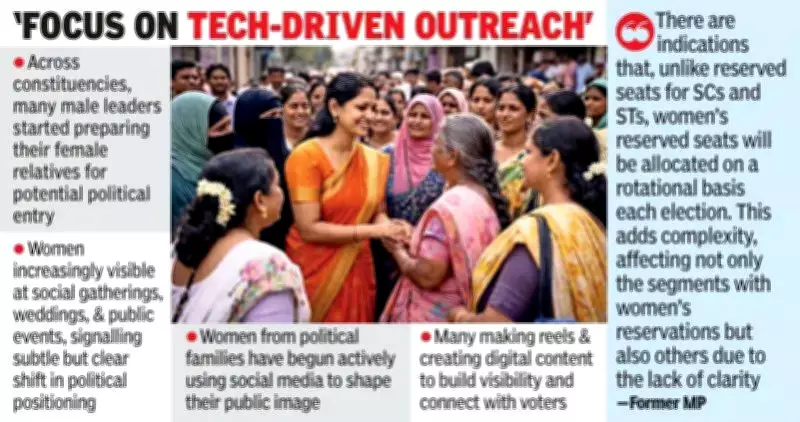
Across constituencies, the strong possibility of seats being reserved exclusively for women has unsettled a wide array of male political figures. This includes sitting legislators, former representatives, and aspiring candidates who now face potential displacement. In a strategic response, many of these leaders have begun actively preparing their female relatives—wives, daughters, sisters, and daughters-in-law—for potential political entry. These women are becoming increasingly visible at key social gatherings, weddings, and public events, signaling a subtle yet unmistakable shift in political positioning and family-based electoral strategies.
Some incumbent MLAs are reported to have deliberately scaled back their campaign intensity during recent municipal elections, wary that the impending structural changes could completely upend their future electoral prospects and traditional strongholds.

Social Media Emerges as Key Tool for Political Women
Transcending party lines, women from established political families have begun leveraging social media platforms, especially Instagram, to craft their public personas and amplify party narratives. From the district level down to mandal units, many are creating reels, posting digital content, and engaging directly with voters to build visibility and grassroots connections. Political sources indicate that a significant and growing number of these women are highly active in this digital space, marking a new, technology-driven era of political outreach and personal branding in Telangana.
Implementation Ambiguity Creates Widespread Dilemma
Adding to the pervasive uncertainty is the critical lack of clarity regarding how the women's reservation will be practically implemented. Key questions remain unanswered: will it be applied after the delimitation exercise is completed, or within the existing framework of assembly and parliamentary constituencies? This ambiguity has left many seasoned leaders in a strategic quandary.
"There are strong indications that, unlike the permanently reserved seats for Scheduled Castes and Scheduled Tribes, women's reserved seats will be allocated on a rotational basis with each election cycle," explained a two-time former Member of Parliament from Telangana. "This rotational model adds immense complexity, affecting not only the segments directly reserved for women but also adjacent constituencies due to the cascading uncertainty. While we support the women's reservation bill in principle, this implementation method could effectively signal the end of the road for many politicians who have built their careers and reputations in specific assembly or parliamentary segments."
New Wave of Women Leaders Steps Forward
Simultaneously, this political churn has actively opened up significant space for a fresh wave of women leaders to emerge. Across all political parties, women—particularly at the district and local levels—are stepping out of the shadows and engaging in political discourse with newfound assertiveness and visibility. This represents a marked departure from historical trends, where electoral opportunities and party tickets were predominantly reserved for men, especially within established political dynasties.

Family Tensions and Internal Competition Surface
However, this transition is not proceeding without friction. Early signs of family-level tensions and internal competition are emerging as traditional roles and expectations begin to shift dynamically. "There have already been multiple reports of family disputes and disagreements arising from these new political dynamics within influential households," remarked a senior BJP leader from the state. "But most of this maneuvering is happening quietly behind the scenes for now. Once the official reservation details and delimitation boundaries become clearer, the internal competition will undoubtedly become more overt and intense."
Political analysts across Telangana agree that the twin factors of delimitation and women's reservation are poised to play a decisive role in shaping the electoral outcomes for both the 2029 state assembly elections and the Lok Sabha polls. These changes hold the potential to disrupt long-established political strongholds, alter traditional voter equations, and redefine power structures across the entire state.