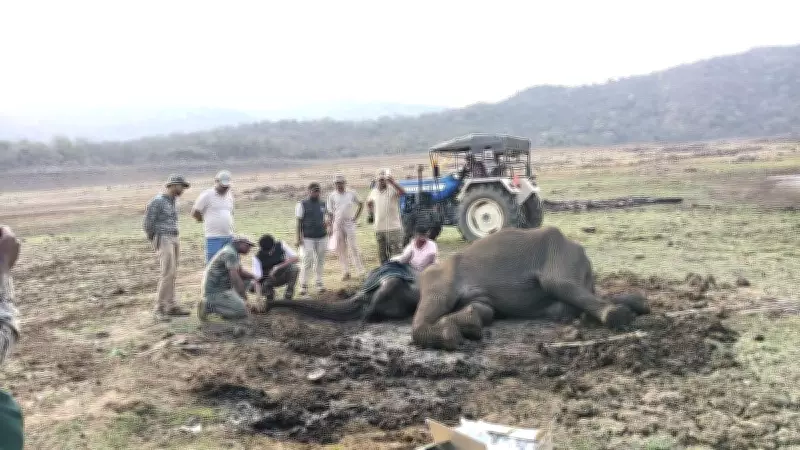
Wild Elephants Rescued from Slush in Karnataka's Chamarajanagar District
In a remarkable display of wildlife conservation, the Karnataka Forest Department successfully rescued two wild elephants that had become trapped in deep slush in the Chamarajanagar district. The incident, which occurred in a forested area, underscores the ongoing challenges of human-wildlife conflict in the region and the dedicated efforts of authorities to protect endangered species.
Details of the Rescue Operation
The rescue operation was launched after local villagers alerted forest officials about the distressed elephants. Upon arrival, the team found the animals struggling in thick, muddy slush, unable to free themselves due to the treacherous conditions. Using specialized equipment and careful techniques, the forest personnel worked tirelessly to extract the elephants without causing harm.
The operation involved:

- Assessing the terrain and elephant behavior to plan a safe approach.
- Employing ropes and machinery to gently pull the elephants out of the slush.
- Monitoring the animals' health throughout the process to ensure no injuries occurred.
Context and Implications
Chamarajanagar, known for its rich biodiversity and elephant corridors, frequently witnesses such incidents as elephants venture into human-dominated areas in search of food and water. This rescue highlights the proactive measures taken by the Forest Department to mitigate conflicts and safeguard both wildlife and local communities.
Experts note that habitat fragmentation and climate change are exacerbating these situations, making such rescue operations increasingly common. The successful outcome in this case is a testament to the training and preparedness of Karnataka's forest staff.
Broader Conservation Efforts
Beyond immediate rescues, the Karnataka Forest Department has implemented various initiatives to address human-wildlife conflict, including:
- Creating elephant-proof trenches and barriers to prevent intrusions into agricultural lands.
- Conducting awareness campaigns to educate villagers on coexisting with wildlife.
- Enhancing surveillance and rapid response teams for timely interventions.
This incident serves as a reminder of the delicate balance between development and conservation, urging continued support for wildlife protection policies in India.