West Bengal Assembly Elections: Decoding Vote Share Trends and Their Political Impact
The political landscape of West Bengal has witnessed significant shifts in recent assembly elections, with vote share trends offering crucial insights into the evolving dynamics between the ruling Trinamool Congress (TMC) and the Bharatiya Janata Party (BJP). As the state gears up for the 2026 assembly polls, analyzing these patterns becomes essential to understand the strategies and challenges faced by both major parties.
Historical Vote Share Trends in West Bengal
Over the past few election cycles, West Bengal has seen a dramatic realignment in voter preferences. Traditionally dominated by the Left Front for decades, the state's political scene transformed with the rise of the TMC under Mamata Banerjee. In recent years, the BJP has emerged as a formidable challenger, making significant inroads into the TMC's stronghold.
In the 2021 West Bengal Assembly elections, the TMC secured a decisive victory with approximately 48% of the vote share, while the BJP garnered around 38%. This represented a substantial increase for the BJP compared to previous elections, where their presence was minimal. The Congress and Left Front, once dominant forces, saw their vote shares decline significantly, indicating a consolidation of the political arena into a primarily two-party contest between TMC and BJP.
What These Trends Mean for the Trinamool Congress (TMC)
For the ruling TMC, maintaining its vote share dominance remains critical. The party's strong performance in rural areas and among minority communities has been a key factor in its electoral success. However, the BJP's growing appeal in urban centers and among certain demographic groups poses a challenge.
The TMC must focus on several strategic areas:
- Consolidating its traditional support base while reaching out to new voter segments.
- Addressing governance issues and development concerns that might affect voter sentiment.
- Countering the BJP's organizational strength and campaign machinery effectively.
Recent by-elections and local polls suggest that the TMC continues to enjoy substantial support, but the party cannot afford complacency as it prepares for 2026.
Implications for the Bharatiya Janata Party (BJP)
The BJP's remarkable growth in West Bengal represents one of the most significant political developments in recent Indian politics. From a marginal presence, the party has become the principal opposition, challenging the TMC's hegemony.
Key considerations for the BJP include:
- Expanding beyond its current strongholds to make deeper inroads into TMC bastions.
- Building a more robust local leadership structure to complement its national appeal.
- Addressing perceptions about its stance on regional identity and cultural issues specific to Bengal.
The BJP's ability to increase its vote share from single digits to nearly 40% demonstrates its potential, but breaking the TMC's majority will require further strategic refinement.
Regional Variations and Demographic Factors
Vote share trends vary significantly across different regions of West Bengal. The TMC maintains strong dominance in South Bengal, particularly in districts like Kolkata, Howrah, and South 24 Parganas. Meanwhile, the BJP has made substantial gains in North Bengal, areas bordering Bangladesh, and certain tribal regions.
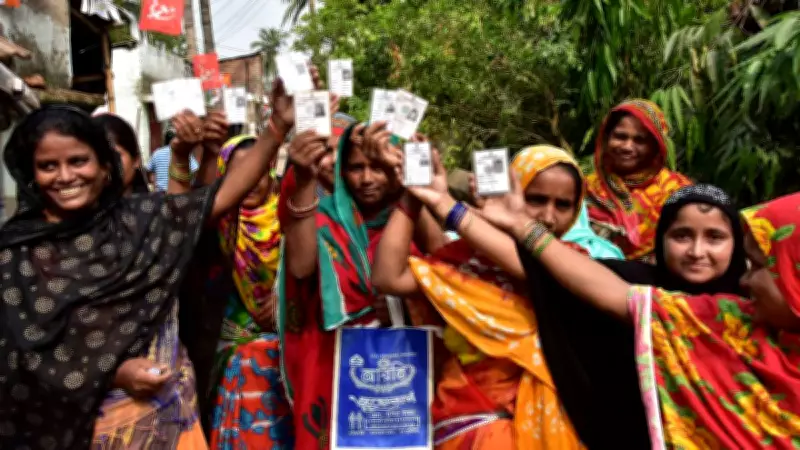
Demographic factors also play a crucial role. The TMC's support among Muslim voters (approximately 30% of the state's population) has been instrumental in its victories. Conversely, the BJP has attracted significant support from Hindu voters, particularly in areas where communal polarization has been more pronounced.
Looking Ahead to the 2026 Assembly Elections
As both parties prepare for the 2026 West Bengal Assembly elections, several factors will influence the vote share dynamics:
Performance of the state government on development, law and order, and economic issues will be critical. The TMC's ability to deliver on its promises and manage public perception will directly impact its vote share.
National political trends and the performance of the central government may also influence voter behavior in West Bengal, though state-specific issues typically dominate assembly elections.
Alliance politics could become more significant, particularly if smaller parties like the Congress or Left Front seek to regain relevance through strategic partnerships.
The evolving vote share trends suggest that West Bengal is transitioning toward a more competitive two-party system. While the TMC currently holds the advantage, the BJP's continued growth makes the 2026 elections potentially one of the most closely contested in the state's history. Both parties will need to carefully analyze these trends and adapt their strategies accordingly to secure victory.