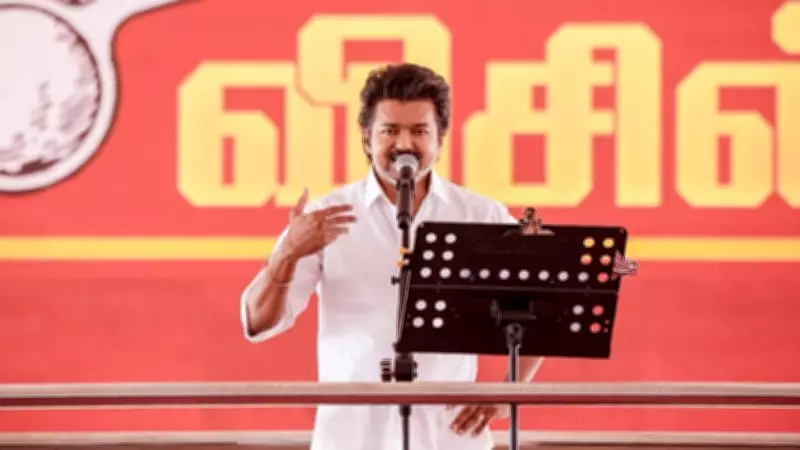
Why Did Vijay's Power-Share Proposal Fail to Disrupt Tamil Nadu's SPA?
In a significant political development in Tamil Nadu, actor-politician Thalapathy Vijay's strategic move to break the DMK-led Secular Progressive Alliance (SPA) has fizzled out without achieving its intended impact. The proposal, which aimed to create divisions within the alliance, ultimately failed to sway key constituents—the Congress and the Viduthalai Chiruthaigal Katchi (VCK)—from their commitment to the state government.
The Target: Secular Progressive Alliance
The Secular Progressive Alliance, a coalition spearheaded by the Dravida Munnetra Kazhagam (DMK), has been a cornerstone of Tamil Nadu's political landscape. Vijay's power-share bomb was specifically designed to exploit the aspirations of the Congress and VCK, both of which have long harbored ambitions to secure more substantial roles within the state administration. However, despite these internal desires, the alliance members demonstrated remarkable unity in the face of external pressure.
Congress and VCK: Aspirations vs. Loyalty
Sources indicate that the Congress and VCK, while eager for greater power-sharing opportunities, prioritized the stability of the SPA over potential fragmentation. Their decision to remain aligned with the DMK underscores a strategic calculation that maintaining the coalition's integrity is crucial for long-term political success in Tamil Nadu. This loyalty effectively neutralized Vijay's attempt to create a rift, highlighting the resilience of the alliance against divisive tactics.
Implications for Tamil Nadu Politics
The failure of Vijay's initiative signals a setback for forces seeking to destabilize the SPA. It reinforces the alliance's cohesion and may influence future political strategies in the state. As Tamil Nadu navigates its complex political dynamics, this episode serves as a reminder of the challenges involved in disrupting established coalitions, even when targeting perceived vulnerabilities.
Reported by ETB Sivapriyan, last updated on March 5, 2026, at 21:15 IST.