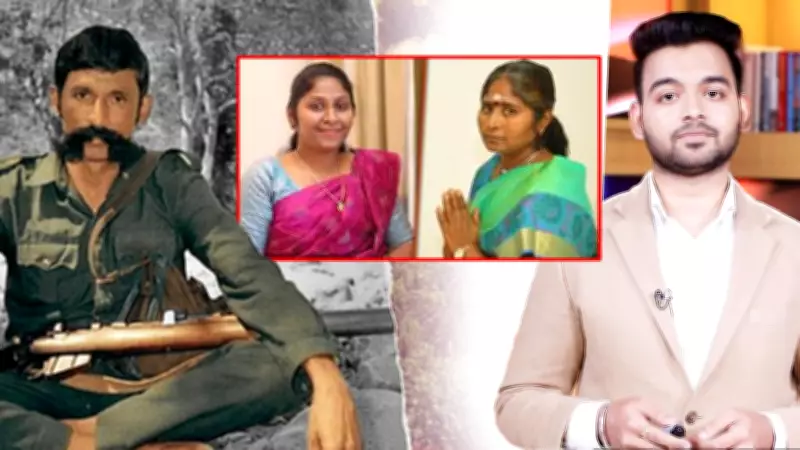
Veerappan's Family Enters Tamil Nadu Political Arena in 2026 Assembly Elections
The name Veerappan has resurfaced in Tamil Nadu's political landscape decades after the infamous bandit's death, as his wife and daughter have officially entered the electoral fray for the 2026 state assembly elections. This unexpected development has captured statewide attention and reignited complex discussions about political legacy, identity narratives, and how controversial historical figures are remembered in public consciousness.
Dual Candidature from Same Family, Different Parties
Muthulakshmi Veerappan, the widow of the late forest brigand, is contesting from the Krishnagiri constituency on a ticket from the Thamizhaga Vazhvurimai Katchi (TVK). Meanwhile, her daughter Vidhya Rani Veerappan has entered the electoral battle from the Mettur seat as a candidate for the Naam Tamilar Katchi (NTK). The fact that both women are contesting from the same family but representing different political parties has created a unique political scenario that analysts are closely watching.
Reigniting Debates on Legacy and Identity Politics
The entry of Veerappan's family members into electoral politics has sparked intense debates across Tamil Nadu. Supporters of the candidates emphasize Tamil identity politics and grassroots appeal, arguing that the family represents marginalized voices in the state's political discourse. They point to the candidates' potential to connect with certain voter segments who feel disconnected from mainstream political parties.

However, critics have raised significant concerns about this development. Many point to Veerappan's well-documented criminal history, which includes charges of sandalwood smuggling, elephant poaching, and multiple murders during his decades-long evasion of authorities. These critics question attempts to reframe or rehabilitate the image of a figure with such a controversial legacy through electoral politics.
Ground Reactions and Political Context
On the ground in both Krishnagiri and Mettur constituencies, reactions have been mixed. Some voters express curiosity about how the Veerappan family name might translate into electoral support, particularly in areas where the bandit once operated. Others remain skeptical about whether political candidacy represents an appropriate path for family members of individuals with such complex histories.
The broader political context in Tamil Nadu adds another layer to this development. The state has seen increasing fragmentation of political parties and the rise of identity-based politics in recent years. The entry of Veerappan's family members represents another dimension in this evolving political landscape, where historical narratives and personal legacies increasingly intersect with electoral strategies.
Broader Implications for Tamil Nadu Politics
This development raises several important questions about the future direction of Tamil Nadu politics:
- How will mainstream political parties respond to this entry of controversial legacy candidates?
- What does this say about the evolving nature of identity politics in the state?
- How will voters balance historical memory with contemporary political choices?
- Will this set a precedent for other families of controversial figures to enter politics?
The 2026 assembly elections in Tamil Nadu now feature this unexpected element that adds complexity to an already competitive political environment. As campaigning intensifies, all eyes will be on how the Veerappan family candidacies perform and what messages resonate with voters in their respective constituencies.
Political analysts suggest that the success or failure of these candidates could signal broader trends in how Tamil Nadu voters engage with legacy politics and historical narratives in their electoral decisions. The coming months will reveal whether this family's political entry represents a momentary curiosity or a more significant shift in the state's political dynamics.