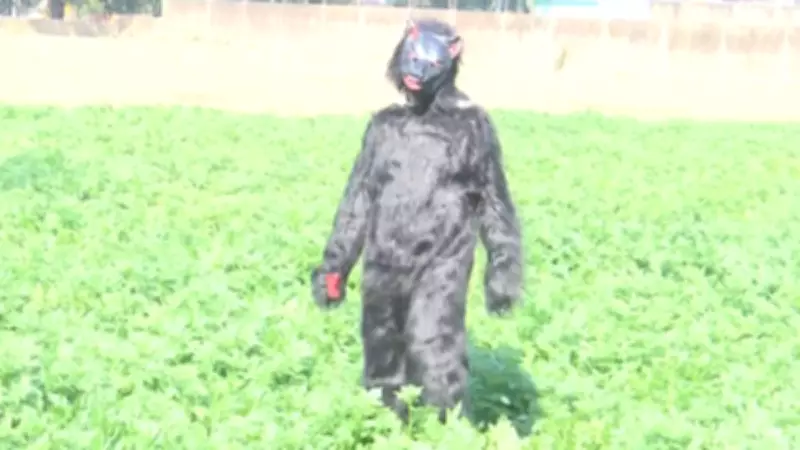
UP Farmers Adopt Bear Costumes to Protect Crops from Monkey Menace in Sambhal
In an unusual and creative response to a persistent agricultural challenge, farmers in Uttar Pradesh's Sambhal district have started wearing bear costumes to scare away monkeys that are destroying their crops. This innovative tactic aims to leverage the natural fear that monkeys have of bears, providing a non-violent and eco-friendly method to safeguard their livelihoods.
The Problem: Monkeys Ravaging Farmlands
For years, farmers in Sambhal have struggled with monkeys invading their fields and causing significant damage to crops such as wheat, vegetables, and fruits. These primates not only consume the produce but also trample plants, leading to substantial economic losses. Traditional methods like fencing, noise-making devices, and even hiring guards have proven ineffective or too costly for many small-scale farmers.
The situation has become increasingly dire, with reports indicating that monkey populations have grown due to habitat loss and food scarcity in nearby forested areas. This has forced farmers to seek out-of-the-box solutions to protect their harvests without harming the animals or violating wildlife protection laws.
The Solution: Dressing Up as Bears
Inspired by the natural predator-prey dynamic, local farmers decided to mimic bears, which are known to be predators of monkeys in the wild. By wearing realistic bear costumes, they hope to instill fear in the monkeys and deter them from approaching the fields. The costumes, often made from locally available materials like fur and masks, are worn during peak foraging times when monkeys are most active.
This approach is not only cost-effective but also aligns with conservation principles, as it avoids the use of harmful chemicals, traps, or lethal measures that could disrupt the local ecosystem. Farmers have reported initial success, with monkeys showing signs of hesitation and reduced intrusion since the implementation of this method.
Community Response and Challenges
The initiative has garnered mixed reactions from the community and authorities. While many farmers praise the ingenuity and practicality of the bear costume strategy, others express skepticism about its long-term effectiveness. Some worry that monkeys might eventually become accustomed to the costumes, rendering them useless over time.
- Local agricultural experts have suggested combining this method with other deterrents, such as planting repellent crops or using ultrasonic devices, to enhance its impact.
- Wildlife officials have emphasized the need for a balanced approach that addresses the root causes of human-wildlife conflict, including habitat conservation and sustainable farming practices.
- Despite the challenges, the farmers' proactive stance highlights their resilience and willingness to experiment with novel solutions in the face of adversity.
Broader Implications for Agriculture and Wildlife
This incident in Sambhal sheds light on the broader issue of human-wildlife conflicts in rural India, where expanding farmlands often encroach on natural habitats. As climate change and urbanization exacerbate these tensions, finding sustainable and humane solutions becomes increasingly critical.
The bear costume method, while unconventional, could serve as a model for other regions grappling with similar problems. It underscores the importance of community-led innovations and the potential for low-tech, culturally appropriate strategies to mitigate conflicts without resorting to violence or environmental harm.
In conclusion, the farmers of Sambhal have demonstrated remarkable creativity in their fight to protect their crops. Their story is a testament to the power of local ingenuity in addressing complex agricultural and ecological challenges, offering hope for more harmonious coexistence between humans and wildlife in the future.