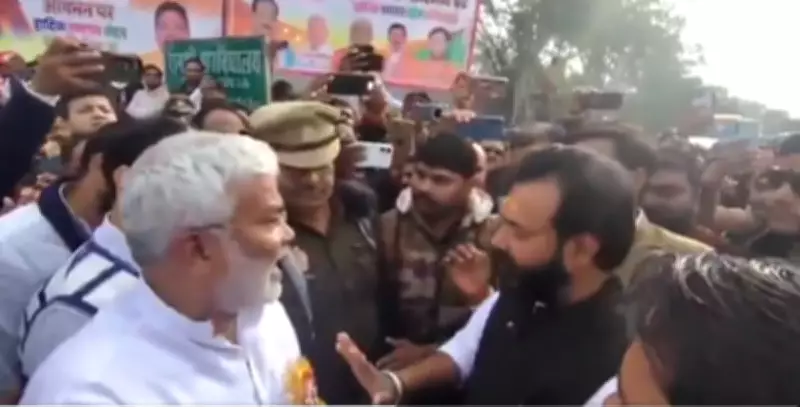
The political landscape in Uttar Pradesh is witnessing escalating tensions as internal conflicts within the Bharatiya Janata Party (BJP) spill onto the streets, raising significant concerns for the party's leadership. A recent public spat between senior minister Swatantra Dev Singh and prominent BJP MLA Brijbhushan Rajput has brought to the forefront the persistent fault lines between the state government and the party organization.
Public Display of Discord
This open confrontation marks a troubling development for the BJP in Uttar Pradesh, as such disputes typically remain behind closed doors. The visible rift suggests that underlying disagreements over governance strategies, resource allocation, and political influence have reached a boiling point. Observers note that this public airing of grievances could undermine the party's cohesive image, especially in a politically sensitive state like Uttar Pradesh.
Historical Context of Internal Tensions
The current episode is not an isolated incident but rather part of a pattern of organizational challenges that have periodically surfaced within the Uttar Pradesh BJP. Under the leadership of Chief Minister Yogi Adityanath and Deputy Chief Minister Keshav Prasad Maurya, the party has navigated complex dynamics between administrative priorities and political mobilization. However, the latest confrontation indicates that these balancing acts are becoming increasingly difficult to maintain.

Implications for Party Unity
The public nature of this conflict has several potential consequences:
- It may embolden other dissenting voices within the party to express their grievances openly.
- The discord could affect the BJP's electoral prospects in upcoming local and state-level elections.
- It might create operational challenges in implementing government policies effectively.
- The situation could necessitate intervention from the central leadership to restore harmony.
Leadership Challenges and Future Outlook
As the BJP prepares for future political battles in Uttar Pradesh, resolving these internal conflicts becomes paramount. The party's ability to present a united front will be crucial for maintaining its dominant position in India's most populous state. The current situation serves as a reminder that even well-established political organizations must continuously work on internal cohesion, particularly when balancing the dual responsibilities of governance and political management.
The coming weeks will likely reveal whether this public disagreement represents a temporary flare-up or signals deeper structural issues within the Uttar Pradesh BJP. Party leaders at both state and national levels will need to address these concerns promptly to prevent further erosion of organizational discipline and public confidence.