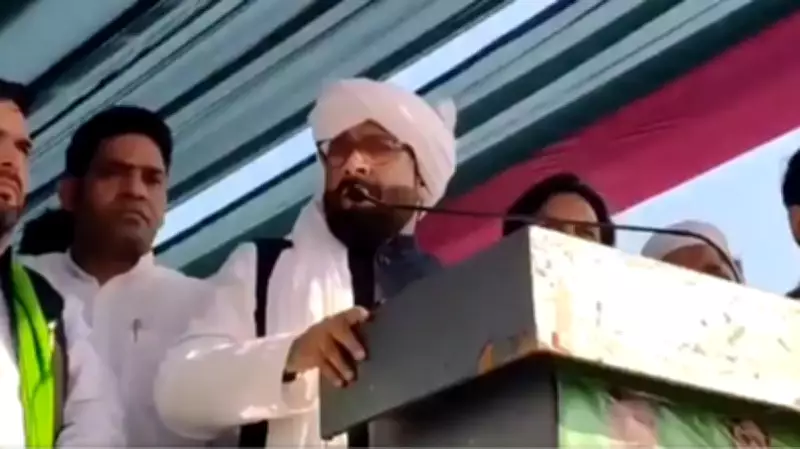
UP AIMIM Chief Faces Legal Action Over Alleged Police Threats
In a significant development in Uttar Pradesh politics, the state chief of the All India Majlis-e-Ittehadul Muslimeen (AIMIM), Shoukat Ali, has been formally booked by authorities for allegedly issuing threats to police personnel. The charges stem from his controversial remarks concerning what he described as the 'encounter' of Muslims, sparking a heated debate on law enforcement practices and minority rights.
Details of the Case and Political Fallout
The case against Shoukat Ali was registered following his public statements, where he is accused of intimidating police officials over their handling of encounters involving members of the Muslim community. This legal action underscores the escalating tensions between political leaders and law enforcement agencies in the state, with implications for communal harmony and governance.
Beyond the immediate legal ramifications, Shoukat Ali launched a scathing critique against two major opposition parties. He asserted that the Samajwadi Party (SP) and the Congress have consistently failed to 'protect' the Muslim population, despite actively seeking their votes during elections. This criticism highlights ongoing concerns about political representation and the safeguarding of minority interests in Uttar Pradesh's volatile political landscape.

Broader Context and Implications
The incident raises critical questions about:
- Police Accountability: The allegations touch on sensitive issues of police conduct and accountability in encounters, a topic that has long been contentious in India.
- Political Dynamics: Shoukat Ali's comments reflect the complex interplay between identity politics and electoral strategies, particularly in a state with a significant Muslim demographic.
- Legal Precedents: The booking of a prominent political figure for such threats could set a precedent for how similar cases are handled in the future, potentially influencing freedom of speech and political discourse.
As the situation unfolds, it is expected to fuel further debate on the role of political parties in addressing community-specific grievances and the boundaries of acceptable political rhetoric. The case also underscores the challenges faced by minority communities in navigating the intersection of politics, law enforcement, and social justice in contemporary India.