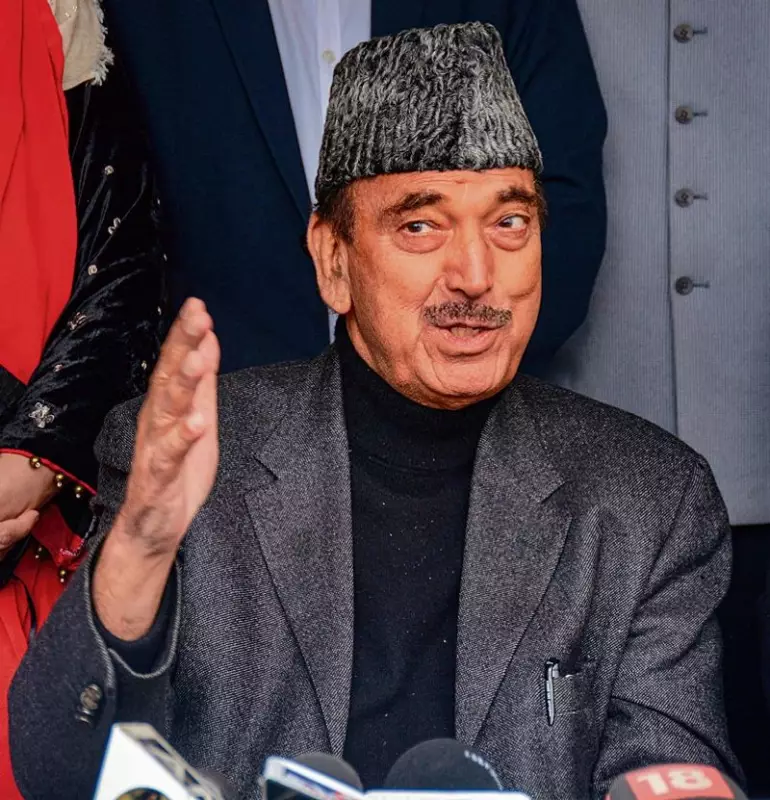
In a dramatic political turnaround that has sent shockwaves through Jammu and Kashmir's political circles, two prominent former ministers have abandoned Ghulam Nabi Azad's Democratic Progressive Azad Party (DPAP) to return to their political roots in the Congress party. This development represents a significant erosion of support for Azad's relatively new political outfit and strengthens Congress's position in the region ahead of crucial elections.
Key Defections That Reshape Political Equations
The political landscape of Jammu and Kashmir witnessed a major transformation as former minister G.M. Saroori and ex-legislator Muhammad Amin Bhat officially rejoined the Congress party. The homecoming ceremony, held at the Congress headquarters in Jammu, was presided over by J&K Congress chief Vikar Rasool Wani and working president Raman Bhalla, signaling the importance the party attaches to these returning leaders.
G.M. Saroori, who previously served as a minister in the Congress-led government, brings considerable political weight from the Kishtwar region. His departure from DPAP is particularly significant given his long-standing association with Congress and his influence in the Chenab Valley. Similarly, Muhammad Amin Bhat, former legislator from Sonawar constituency in Srinagar, adds substantial political capital to Congress's revitalized efforts in Kashmir Valley.

Strategic Implications for Upcoming Elections
The timing of these defections couldn't be more crucial, with political parties preparing for potential elections in Jammu and Kashmir. The return of two experienced politicians to Congress deals a severe blow to Ghulam Nabi Azad's DPAP, which has been positioning itself as a viable alternative to mainstream parties in the region. This development significantly weakens DPAP's organizational structure and raises questions about its ability to mount an effective electoral challenge.
During the rejoining ceremony, Congress leaders emphasized that these returns mark the beginning of a larger trend of leaders coming back to the party fold. J&K Congress chief Vikar Rasool Wani declared that many more disillusioned leaders who had left the party are expected to return in the coming days, indicating a possible consolidation of Congress's position in the region.
Broader Impact on Jammu and Kashmir Politics
This political realignment underscores the continuing fluidity in Jammu and Kashmir's political landscape following the abrogation of Article 370 and the reorganization of the state into two union territories. The Congress party, which had seen several high-profile departures in recent years, appears to be regaining momentum at the expense of newer political formations.
The return of Saroori and Bhat to Congress represents more than just individual political decisions—it signals a potential shift in political loyalties that could influence voter preferences in upcoming elections. Both leaders bring with them substantial grassroots connections and political experience that could prove invaluable for Congress as it seeks to reestablish its presence across both Jammu and Kashmir regions.
As political activities intensify in anticipation of elections, these developments highlight the continuing importance of established political networks and the challenges faced by new parties in building sustainable political organizations. The coming weeks are likely to see further political maneuvering as parties position themselves for what promises to be a closely contested electoral battle in Jammu and Kashmir.