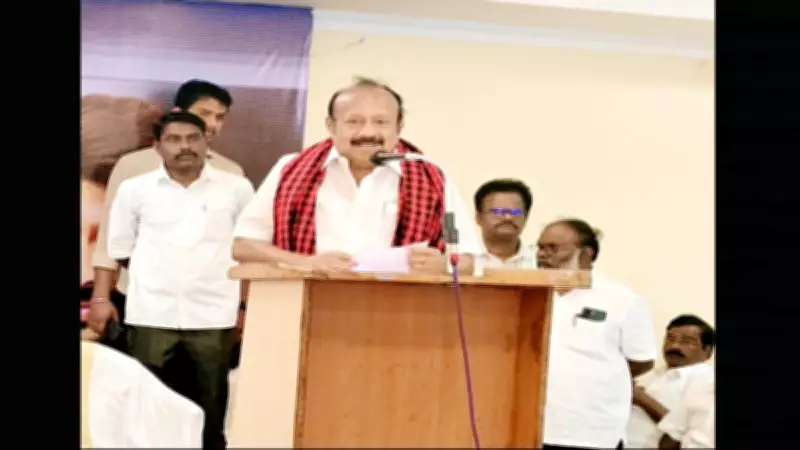
Tamil Nadu Minister's 'Pani Puri' Remark Ignites Political Storm Ahead of Elections
A recent statement by Tamil Nadu Minister MRK Panneerselvam has sparked a significant political controversy, fueling long-standing regional tensions between North and South India. The minister's comments, made in the context of the upcoming elections, have drawn sharp criticism and debate across the political spectrum.
Controversial Comparison Draws Widespread Condemnation
Minister Panneerselvam reportedly drew a stark contrast between the economic activities of North Indians and South Indians. He suggested that while individuals from North India are often engaged in selling street food like pani puri, people from South India, particularly Tamil Nadu, focus on sending their children to the United States for higher education and better opportunities.
This comparison has been perceived by many as a derogatory and divisive remark, reinforcing stereotypes and deepening the North-South divide. Political analysts note that such statements often emerge during election seasons, aiming to appeal to regional sentiments and consolidate voter bases.

Historical Context of Regional Tensions
The North-South divide in India is not a new phenomenon. It encompasses various aspects, including:
- Economic disparities in development and investment
- Cultural differences in language, cuisine, and traditions
- Political representation and power dynamics at the national level
Minister Panneerselvam's jibe taps into these underlying tensions, potentially polarizing public opinion. Critics argue that such rhetoric undermines national unity and distracts from substantive issues like governance, development, and welfare policies.
Reactions from Political Leaders and the Public
The remark has elicited strong reactions from various quarters:
- Opposition parties have condemned the statement as inflammatory and irresponsible, calling for an apology from the minister.
- Social media platforms are abuzz with debates, with many users expressing outrage over the stereotyping, while others defend it as a reflection of regional pride.
- Civil society groups emphasize the need for inclusive dialogue that celebrates India's diversity rather than fostering divisions.
This incident highlights how regional identities can be politicized, especially in the run-up to elections, where emotive issues often take center stage over policy discussions.
Implications for the Upcoming Electoral Landscape
As India approaches its next round of elections, statements like these could influence voter behavior and campaign strategies. Key implications include:
- Mobilization of regional sentiments to garner support
- Potential backlash from communities feeling targeted or marginalized
- Shift in political discourse towards identity politics rather than developmental agendas
Observers warn that such controversies might overshadow critical issues like economic growth, healthcare, and education, which affect all Indians regardless of regional background.
In conclusion, Minister MRK Panneerselvam's pani puri jibe has reignited the North-South debate, adding fuel to the political fire ahead of the elections. It serves as a reminder of the delicate balance between regional pride and national cohesion in India's diverse democracy.