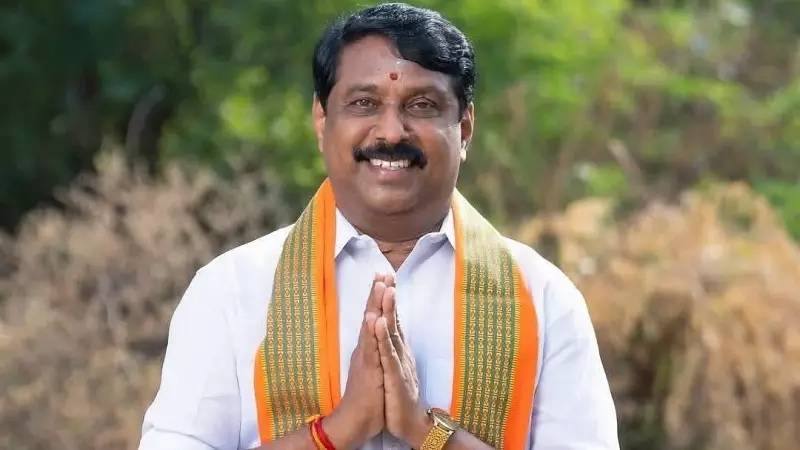
Tamil Nadu Bharatiya Janata Party (BJP) president K. Nagenthran sparked a political debate with a pointed question following his detention by police: "What's wrong if we become like Ayodhya?" The remark came in the aftermath of a significant protest and subsequent police action involving hundreds of party members in the state.
Mass Detentions Follow BJP Protest
The incident unfolded on December 4, 2025, when Nagenthran led a group of approximately 300 BJP members in a demonstration. They were protesting against the state police and the Tamil Nadu government for allegedly preventing them from lighting a ceremonial lamp, known as 'Deepa Jyothi'. This was despite the party claiming they had received court permission for the act.
The protest escalated, leading to the detention of Nagenthran and the other party workers by law enforcement authorities. The detentions highlighted the ongoing political tensions in the state between the ruling Dravidian parties and the BJP, which is striving to expand its footprint in Tamil Nadu.
Nagenthran's Ayodhya Comparison
It was during this tense period that Nagenthran posed his rhetorical question, drawing a direct parallel to Ayodhya. The city of Ayodhya in Uttar Pradesh holds immense symbolic significance for the BJP and its ideological affiliates, following the resolution of a long-standing temple dispute and the subsequent construction of the Ram Mandir.
By asking, "What's wrong if we become like Ayodhya?", the state BJP chief appeared to be invoking the model of assertive cultural and political assertion that the party champions. The comment is seen as a challenge to the prevailing political culture in Tamil Nadu and an assertion of the BJP's right to conduct its religious and cultural ceremonies publicly.
Political Repercussions and Context
The event and Nagenthran's statement are likely to have significant political repercussions. It frames a local administrative issue concerning permissions for a religious event into a larger national narrative of cultural rights and political identity. The BJP has consistently accused the Tamil Nadu government of being hostile to its activities and Hindu religious practices, a charge the state government denies.
The detention of such a large number of party workers, including its state president, is expected to galvanize the BJP's cadre in Tamil Nadu. It provides the party with a potent symbol of alleged state oppression to mobilize support. Conversely, rival parties may view the protest and the Ayodhya reference as an attempt to import divisive politics into the state's distinct socio-political landscape.
As of December 6, 2025, the fallout from the detentions and the provocative question continues to unfold, adding another chapter to the complex political dynamics of Tamil Nadu.