Tamil Nadu 2026 Assembly Elections: A Political Landscape Transformed
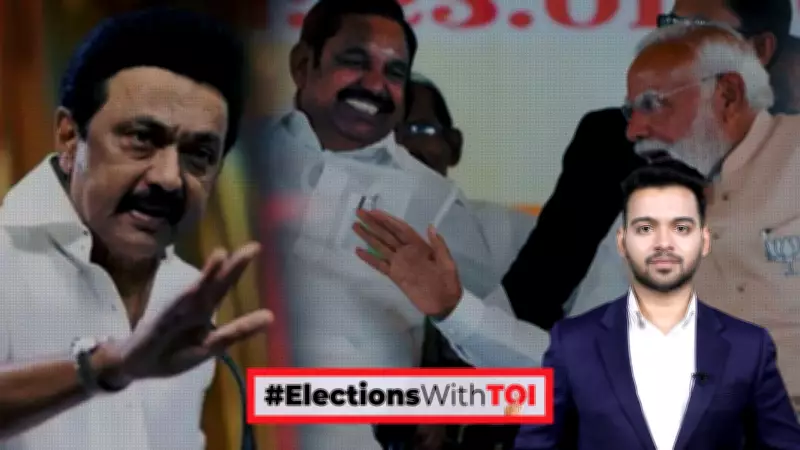
The Tamil Nadu Assembly elections of 2026 have erupted into a fiercely contested political battleground, marked by escalating controversies, deep ideological divides, and the disruptive emergence of new political forces. What was anticipated as a routine electoral exercise has transformed into a high-stakes confrontation that could redefine the state's political trajectory for years to come.
The House Arrest Controversy and Campaign Intensification
A particularly explosive development has been the "house arrest" allegation involving top leadership of the ruling Dravida Munnetra Kazhagam (DMK). This claim has sent shockwaves through the political establishment, prompting a sharp and immediate response from the principal opposition party, the All India Anna Dravida Munnetra Kazhagam (AIADMK). The allegation has served as a catalyst, injecting unprecedented intensity into an already heated campaign season and dominating media narratives across the state.
Ideological Battle: Dravidian Model vs Delhi Model
At the heart of the electoral discourse lies a fundamental ideological clash: the Dravidian model versus the Delhi model of governance. The DMK, under its current leadership, is vigorously championing its welfare-driven Dravidian model, emphasizing state-specific policies, social justice initiatives, and regional autonomy. In stark contrast, opposition parties are mounting a concerted challenge, questioning what they describe as excessive centralization of power and a lack of political accountability associated with the Delhi-centric governance approach. This debate transcends mere policy differences, touching upon core issues of federalism, cultural identity, and administrative philosophy.

TVK's foray into the political arena has fundamentally disrupted traditional vote equations, particularly challenging the DMK's stronghold in urban centers like Chennai. This new entrant has introduced an element of volatility and unpredictability, forcing established parties to recalibrate their campaign strategies and coalition calculations.
Complex Alliances and Shifting Political Equations
The political landscape is further complicated by evolving alliance dynamics. Traditional blocs are being tested, and new partnerships are being explored as parties attempt to navigate the multi-cornered contest. The presence of TVK has particularly forced a re-evaluation of vote-sharing patterns, with every major player carefully assessing potential post-poll scenarios and coalition possibilities.
Beyond the immediate electoral arithmetic, these developments carry profound implications for Tamil Nadu's political future.The 2026 elections are not merely about which party forms the government but about determining the direction of the state's governance model, its relationship with the central government, and the very nature of its political discourse. The outcome will signal whether Tamil Nadu continues to champion its distinctive Dravidian political ethos or embraces a more nationally-aligned governance framework.
As campaigning reaches its peak, several critical questions remain unanswered: How will the house arrest controversy impact voter sentiment? Can the DMK successfully defend its welfare governance record against the Delhi model critique? What electoral space will TVK capture in its debut outing? And most importantly, which ideological vision will ultimately resonate with Tamil Nadu's diverse electorate? The answers to these questions will unfold on election day, but the battle lines have already been drawn in what promises to be one of the most consequential state elections in recent Indian political history.