TMC Unveils Four Candidates for Rajya Sabha Elections, BJP Launches Political Attack
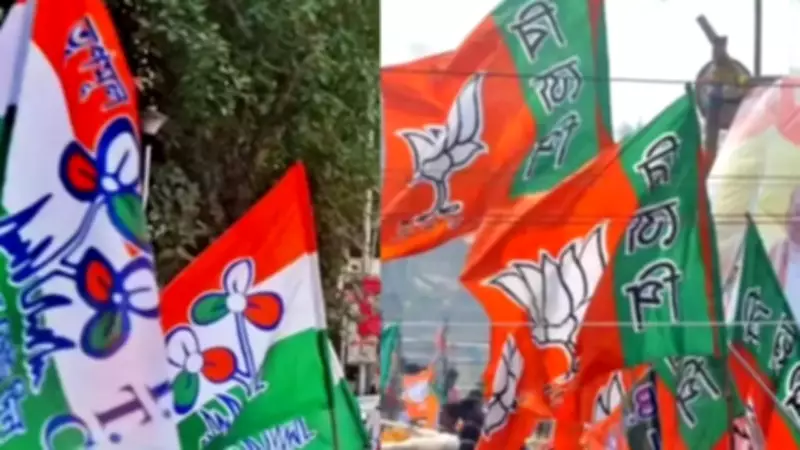
The political landscape in West Bengal witnessed fresh turbulence on Thursday as the All India Trinamool Congress (TMC) officially announced its roster of four candidates for the upcoming Rajya Sabha elections. The nominations, which include prominent figures from diverse professional backgrounds, have immediately ignited a fierce political confrontation with the Bharatiya Janata Party's state unit.
Trinamool Congress Nominates Diverse Quartet
In an official statement released from New Delhi, the TMC revealed its carefully selected nominees: former Union Minister and singer Babul Supriyo, former West Bengal Director General of Police Rajeev Kumar, distinguished senior advocate Menaka Guruswamy, and acclaimed actor Koel Mallick. The party emphasized that these individuals embody Trinamool's core values of resilience and dedication to protecting citizens' rights and dignity.
The TMC statement elaborated, "These nominees reflect our party's unwavering commitment to serving the people of India with integrity and purpose. We are confident they will uphold Trinamool's enduring legacy while championing the aspirations of citizens across the nation." The party positioned the selections as strategic choices representing both experience and fresh perspectives in legislative governance.
BJP's West Bengal Unit Launches Scathing Criticism
The announcement triggered an immediate and caustic response from the Bharatiya Janata Party's West Bengal division. The BJP launched a pointed attack, alleging that half of Trinamool's Rajya Sabha nominees are non-Bengalis, directly challenging Chief Minister Mamata Banerjee's frequently proclaimed pro-Bengal political stance.
In a sharply worded statement, the BJP's state unit questioned, "Couldn't Mamata Banerjee identify enough qualified Bengalis for nomination? Or is she systematically rewarding individuals who safeguard her secrets and participate in her alleged corruption network?" The party accused the TMC of instrumentalizing Bengali identity purely for electoral advantage while neglecting genuine regional representation.
The BJP further intensified its criticism by asserting that Banerjee "harbors contempt for Bengalis" despite her public advocacy for their causes. The party declared that these nominations starkly reveal what it termed the "hollowness of Trinamool's regional pride narrative," suggesting a disconnect between the party's rhetoric and its actual political decisions.
Political Implications and Broader Context
This exchange represents the latest chapter in the ongoing political rivalry between the two major parties in West Bengal. The Rajya Sabha nominations have become a flashpoint for broader debates about:
- Regional identity versus national representation in legislative bodies
- The authenticity of political parties' commitment to their stated principles
- Strategic candidate selection ahead of future electoral contests
- The intersection of professional expertise and political affiliation in governance
The controversy emerges as both parties prepare for upcoming political battles, with the Rajya Sabha elections serving as a preliminary skirmish in their larger conflict. Political analysts suggest that such exchanges will likely intensify as election cycles approach, with identity politics and regional allegiance becoming increasingly central to political discourse in West Bengal.
The TMC has maintained that its nominations reflect a commitment to merit and diverse representation, while the BJP continues to frame the issue as evidence of what it characterizes as Trinamool's political hypocrisy. This confrontation underscores the deeply polarized nature of West Bengal politics, where even routine electoral procedures become battlegrounds for competing narratives about identity, representation, and political integrity.