Tamil Nadu Braces for Unprecedented Three-Way Electoral Battle, Defying Predictions
The political landscape of Tamil Nadu is undergoing a remarkable transformation, with the state now poised for a three-way electoral contest that has caught many political observers by surprise. This unexpected development stems primarily from the continued difficulties plaguing the longstanding alliance between the Dravida Munnetra Kazhagam (DMK) and the Indian National Congress.
Alliance Struggles Create New Political Dynamic
The DMK-Congress alliance, which has been a cornerstone of Tamil Nadu politics for decades, is facing significant internal challenges and strategic disagreements. These ongoing difficulties have created a power vacuum and an opening for other political forces to assert themselves more prominently in the state's political arena.
This alliance turmoil has fundamentally altered the electoral calculus in Tamil Nadu, moving the state away from the traditional two-party dominance of DMK and All India Anna Dravida Munnetra Kazhagam (AIADMK). The weakening of this established political partnership has allowed for the emergence of a more fragmented and competitive political environment.
Emergence of a Genuine Three-Way Contest
What makes this situation particularly noteworthy is that few political analysts or pollsters anticipated this development. Most election predictions and political forecasts had assumed the continuation of the traditional DMK versus AIADMK binary, with the DMK-Congress alliance maintaining its cohesion and electoral significance.
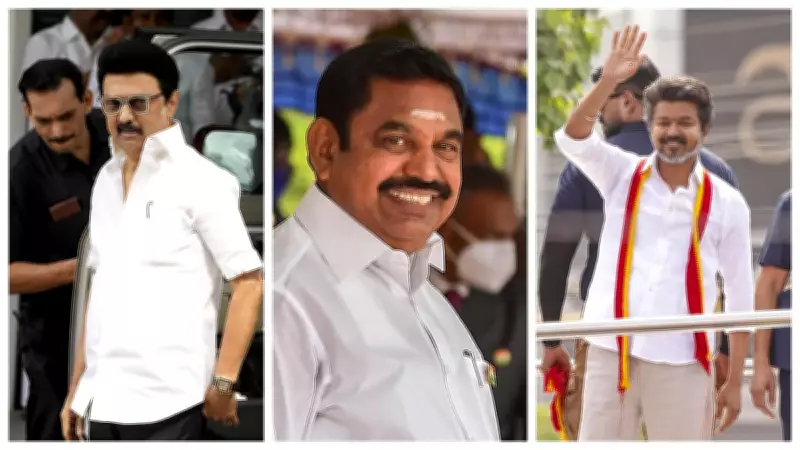
The current political realignment suggests that Tamil Nadu voters may now have three distinct political alternatives to consider, each with its own vision for the state's future. This represents a significant departure from the state's recent political history and could potentially reshape Tamil Nadu's governance and policy direction for years to come.
Implications for Tamil Nadu's Political Future
The emergence of this three-way contest carries several important implications:
- Increased political competition that may lead to more responsive governance
- Greater voter choice across different ideological spectrums
- Potential for coalition politics in the post-election scenario
- New political alignments that could redefine Tamil Nadu's relationship with national politics
This development also raises questions about how traditional voting blocs and caste equations might shift in response to the new political configuration. The fragmentation of the established political order could lead to unexpected electoral outcomes and potentially surprise results when votes are finally counted.
As Tamil Nadu moves toward its next electoral test, political parties are now forced to recalibrate their strategies, messaging, and coalition-building efforts. The state that has long been known for its stable two-party system now finds itself at the brink of a potentially transformative political moment, one that could redefine power dynamics in one of India's most politically significant states.