Sunetra Pawar Creates History as Maharashtra's First Woman Deputy Chief Minister
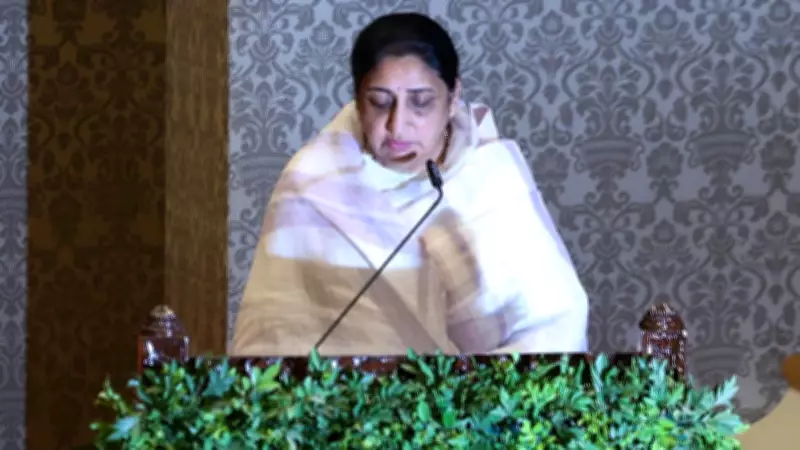
In a landmark moment for Maharashtra politics, Sunetra Pawar was sworn in as the state's first female deputy chief minister on January 31, 2026. The 63-year-old Rajya Sabha MP took oath at a ceremony administered by Maharashtra Governor Acharya Devavrat, marking a significant milestone in her political journey.
A Political Journey Marked by Family Legacy and Recent Electoral Contest
Sunetra Pawar, wife of the late Ajit Pawar who previously served as Maharashtra's deputy chief minister, had largely remained away from active politics until the 2024 Lok Sabha elections. Her political entry gained national attention when she contested from the prestigious Baramati constituency, facing her sister-in-law and incumbent NCP (SP) MP Supriya Sule in a closely watched family contest.
Despite her electoral defeat in Baramati, Sunetra Pawar's political trajectory took a dramatic turn with her recent appointment to the state's second-highest constitutional position. Her elevation comes at a crucial juncture for Maharashtra's political landscape and the Nationalist Congress Party (NCP).

The Swearing-In Ceremony: Emotional Moments and Notable Absences
The oath-taking ceremony at Mumbai's Vidhan Bhavan witnessed a departure from typical political celebrations. The entire event lasted merely ten minutes and was characterized by tense and emotional moments rather than the usual festivities and applause. NCP ministers, legislators, and workers gathered at the ceremony raised slogans including "Long Live Ajit Pawar" and "Sunetra tai aage badho" (Sunetra sister, march ahead).
Notably, the ceremony saw limited family representation from the Pawar clan. Sunetra Pawar's younger son Jay Pawar was present, but NCP-SP chief Sharad Pawar revealed earlier in the day that the family had received no formal invitation for the swearing-in event.
The ceremony was attended by Maharashtra Chief Minister Devendra Fadnavis and Deputy Chief Minister Eknath Shinde, underscoring the significance of this appointment within the state's ruling coalition.
Unanimous Election as NCP Legislature Party Leader
Sunetra Pawar's path to the deputy chief minister position began with her unanimous election as the NCP's Legislature Party leader earlier on January 31, 2026. A crucial meeting of Nationalist Congress Party Legislative Party members was held at Vidhan Bhavan, Mumbai, at 2 PM, presided over by Sunil Tatkare, Member of Parliament and State President of the NCP in Maharashtra.
The meeting, conducted in the presence of National Working President and MP Praful Patel, resulted in two significant resolutions:
- Unanimous election of Sunetra Ajitdada Pawar as the Leader of the Maharashtra Legislative Party
- Authorization for Sunetra Ajitdada Pawar to make all decisions regarding the NCP Legislative Party
These resolutions were formally moved by senior NCP leader Chhagan Bhujbal and seconded by prominent party members including Hasan Mushrif, Dilip Walse Patil, Dhananjay Munde, Narhari Zirwal, and Sanjay Bansode.
Formal Communication and Political Implications
Following the unanimous election, state NCP chief Sunil Tatkare submitted a formal letter to Chief Minister Devendra Fadnavis, conveying the party's selection of Sunetra Pawar as their legislature party leader. This communication set in motion the constitutional process that led to her induction into the council of ministers.
Sunetra Pawar's appointment represents a significant development in Maharashtra's political dynamics, particularly within the NCP and the ruling Mahayuti alliance. As she steps into the role previously held by her late husband, political observers are closely watching how she will navigate the complex political landscape, manage party dynamics, and address the expectations placed upon her as Maharashtra's first woman deputy chief minister.
The historic nature of her appointment, combined with the emotional context of succeeding her husband in a key political position, makes this development one of the most significant in recent Maharashtra political history.