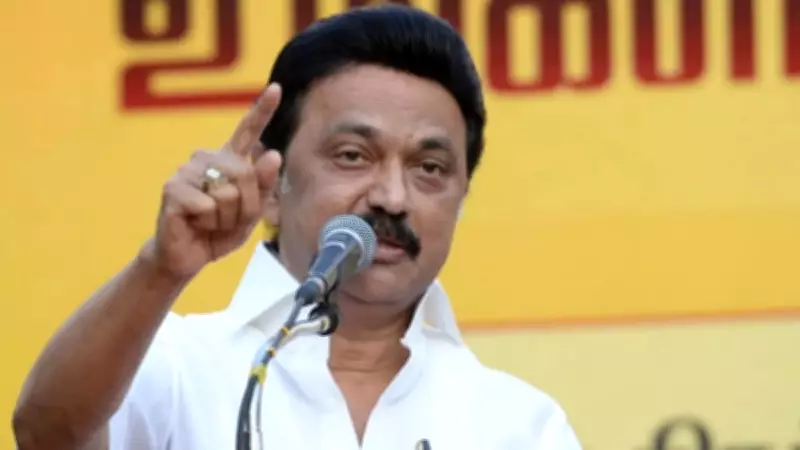
Tamil Nadu Chief Minister M K Stalin Criticizes Modi Government Over CBSE's Three-Language Policy
Tamil Nadu Chief Minister M K Stalin has launched a no-holds-barred attack against the Narendra Modi-led central government. This strong political criticism comes in response to a recent circular issued by the Central Board of Secondary Education (CBSE). The CBSE announced its plans to introduce a three-language formula starting from Class six, which is aligned with the National Education Policy (NEP).
Stalin's Political Stand on Language Policy
Chief Minister Stalin has turned this educational policy announcement into a significant political issue ahead of the Tamil Nadu elections scheduled for 2026. He has vehemently opposed the implementation of the three-language formula, viewing it as an imposition by the central government on the state's educational autonomy. Stalin's criticism reflects long-standing linguistic sentiments in Tamil Nadu, where there has been historical resistance to the imposition of Hindi and other languages.
The CBSE's circular outlines that students from Class six onward will be required to study three languages as part of their curriculum. This policy change is designed to align with the broader objectives of the National Education Policy, which emphasizes multilingualism and the preservation of India's linguistic diversity. However, Stalin argues that this move undermines the state's rights and could potentially marginalize regional languages.

Implications for Tamil Nadu Elections 2026
Political analysts suggest that Stalin's aggressive stance on this issue is strategically timed to galvanize support ahead of the 2026 state elections. By framing the CBSE's policy as an attack on Tamil identity and autonomy, he aims to consolidate his voter base and position himself as a defender of regional interests against central overreach. This controversy adds a new dimension to the electoral landscape in Tamil Nadu, where language politics has often played a crucial role.
The Modi government has defended the three-language formula as part of its efforts to promote national integration and enhance students' linguistic capabilities. Officials argue that learning multiple languages can provide cognitive benefits and better prepare students for a diverse workforce. Despite these justifications, Stalin remains unwavering in his opposition, signaling that this issue will likely remain a focal point in the upcoming political discourse.
As the debate intensifies, stakeholders including educators, parents, and political parties are closely monitoring developments. The outcome of this controversy could influence not only educational policies but also the political dynamics in Tamil Nadu as the 2026 elections approach.