Stalin Challenges NDA on Three-Language Policy Implementation in Tamil Nadu
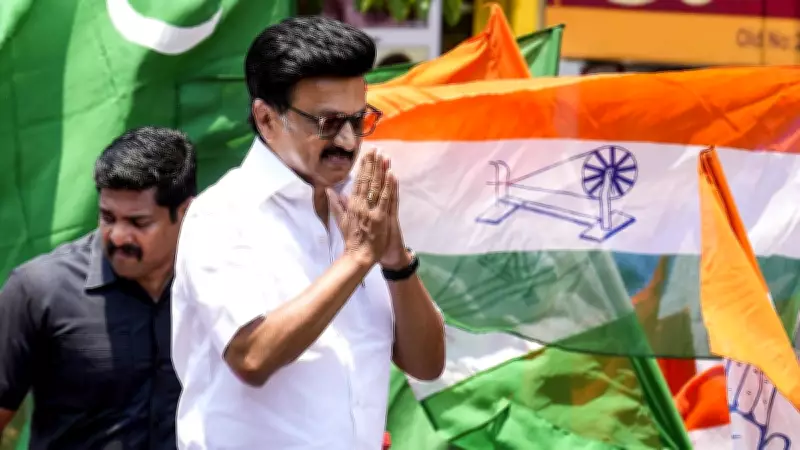
Tamil Nadu Chief Minister MK Stalin has publicly questioned the National Democratic Alliance (NDA) regarding its stance on the three-language policy, specifically in the context of Tamil Nadu. In a recent statement, Stalin asked, "Does the NDA have the guts to say they will implement the three-language policy in Tamil Nadu?" This query highlights ongoing tensions between state and central governments over language policies in education.
NEP's Constitutional Principles and Language Promotion
The National Education Policy (NEP) is designed to uphold constitutional principles by promoting all languages equally across India. It aims to address the limitations of the existing two-language system, which has been a point of contention in states like Tamil Nadu, where there is strong opposition to the imposition of Hindi. The NEP seeks to foster multilingualism while respecting regional linguistic identities, but its implementation faces challenges in regions with distinct language preferences.
Background on the Three-Language Formula
The three-language formula, a longstanding educational framework in India, typically involves the study of:

- The regional language or mother tongue
- Hindi or another Indian language
- English
In Tamil Nadu, this policy has historically been resisted due to concerns over Hindi imposition, with the state favoring a two-language system of Tamil and English. Stalin's remarks reflect this deep-seated opposition and question the NDA's willingness to enforce the policy against local sentiments.
Political Implications and State-Center Dynamics
This issue underscores broader political dynamics between the central government and Tamil Nadu. Stalin's challenge is seen as a strategic move to assert state autonomy and rally support against perceived central overreach. It also brings attention to how language policies can influence electoral politics and regional identity in India.
As debates continue, the focus remains on balancing national educational goals with regional linguistic diversity, making this a critical topic in India's political and educational landscape.