UP Police Blocks SP Delegation from Meeting Noida Workers Over Wage Dispute
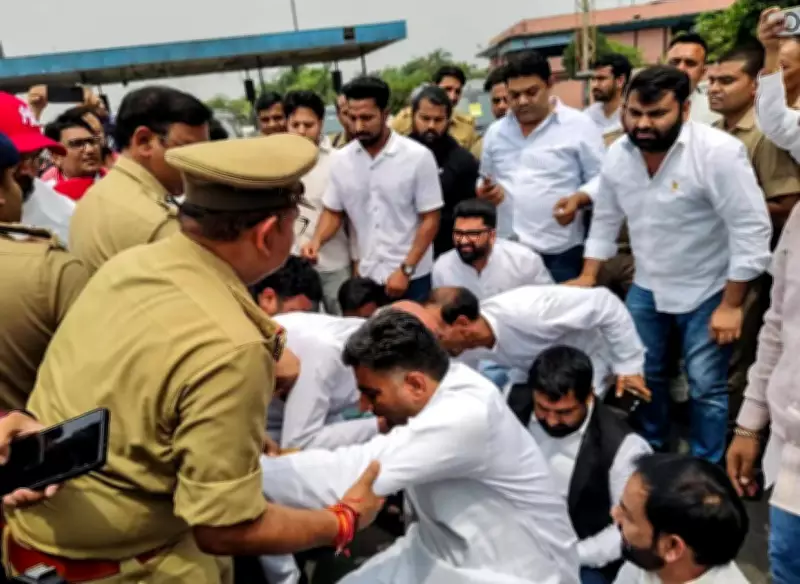
A significant political confrontation unfolded in Uttar Pradesh on Friday as a 10-member delegation from the Samajwadi Party (SP) was prevented by police from proceeding to Noida. The delegation, led by Mata Prasad Pandey, the Leader of the Opposition in the UP Assembly, was en route to meet with industrial workers who have been protesting for parity in minimum wages.
Delegation Halted at District Borders
The police intervention occurred at the district borders, effectively barring the SP members from reaching the workers in Noida. This move has ignited a sharp political debate, with opposition leaders condemning the action as an attempt to suppress democratic engagement.
Mata Prasad Pandey expressed strong disapproval of the police restrictions, stating that it demonstrates the government and district administration's reluctance to allow the opposition to assess ground realities. "The problems of the workers should be examined and resolved. This government was fast asleep initially. When the situation worsened, they resorted to wielding batons," Pandey asserted, highlighting the administration's delayed response to the workers' grievances.

SP Condemns Government's Action
In a formal statement, SP national secretary Rajendra Chaudhary condemned the police action, emphasizing that the delegation was acting on the instructions of party president Akhilesh Yadav. "The delegation was going to Noida to meet the aggrieved workers and understand their problems. But it was stopped by Chief Minister Yogi Adityanath's police. This government does not believe in a democratic set-up," Chaudhary declared, accusing the state government of undermining democratic principles.
The incident underscores the ongoing tensions between the ruling party and the opposition in Uttar Pradesh, particularly concerning labor rights and wage issues. Workers in Noida have been vocal in their demands for equitable minimum wages, and the SP's attempt to engage with them directly has been met with administrative hurdles.
Broader Implications for Democratic Processes
This episode raises questions about the freedom of political representatives to interact with constituents and address public concerns. The SP's delegation aimed to bridge the gap between the workers' plight and political advocacy, but the police intervention has sparked allegations of governmental overreach.
As the situation develops, it remains to be seen how the state administration will address the workers' demands and whether further political engagements will be permitted. The clash highlights the delicate balance between maintaining order and upholding democratic rights in a politically charged environment.