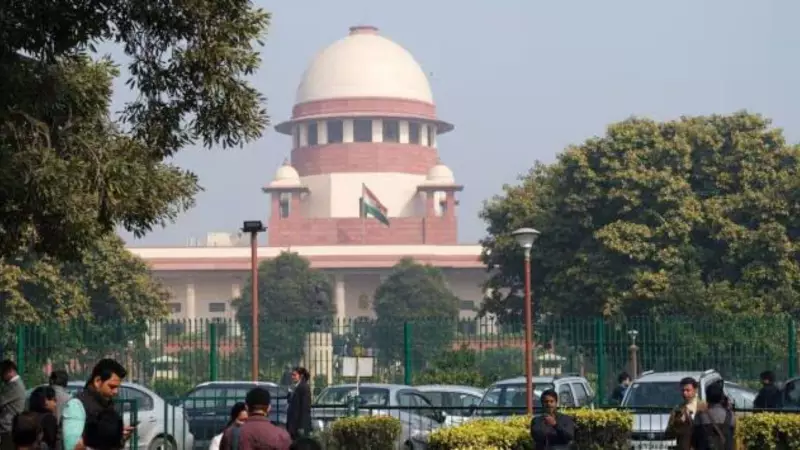
The Supreme Court has agreed to hear a significant contempt petition on November 17, targeting the Telangana Legislative Assembly Speaker for an alleged failure to comply with its directive to decide on the disqualification of ten BRS legislators who switched to the Congress party.
Defiance of Supreme Court's Three-Month Deadline
This legal action stems from a July 31 order by a Supreme Court bench, led by Chief Justice of India B R Gavai and including Justice A G Masih. The court had explicitly instructed the Speaker to adjudicate the petitions seeking the disqualification of the ten BRS MLAs expeditiously and within a strict three-month timeframe.
During a recent hearing, the petitioner's counsel informed the bench that the Speaker had not taken any action on the matter. "The Speaker has not touched the matter, has not conducted any proceedings. The MLAs are continuing," the counsel stated, adding that the other side was attempting to protract the proceedings for "obvious reasons," a remark seen as a reference to CJI Gavai's impending retirement on November 23.

Responding firmly, Chief Justice Gavai asserted, "Supreme Court will not close after the 24th of November," while scheduling the contempt plea for a hearing on November 17.
Supreme Court's Strong Stance on Anti-Defection Law
The July 31 ruling was a powerful reaffirmation of the principles behind the anti-defection law. The apex court emphasized that the law's core objective is to curb the "evil of political defections" and that the Speaker's role is to ensure an expeditious decision to avoid undue delays.
In a crucial observation, the court clarified that the Speaker, while acting as a tribunal in such cases, does not enjoy any "constitutional immunity" from judicial oversight. The bench also directed the Telangana Speaker not to permit the accused MLAs to delay the proceedings, warning that an adverse inference could be drawn against any legislator employing such tactics.
Highlighting the gravity of the situation, the court noted that the Speaker had not even issued notices on the disqualification petitions for almost seven months prior to its intervention. It famously remarked that inaction would be akin to allowing a "widely criticised situation of operation successful, patient dead."
A Call for Parliamentary Review
Going beyond the immediate case, the Supreme Court's July order also urged Parliament to undertake a significant review. It questioned the effectiveness of the current mechanism under the Tenth Schedule of the Constitution, which entrusts Speakers with the task of deciding on defections.
The court stated that to safeguard the foundations of democracy, it is essential to examine whether this mechanism is sufficient to combat political defections effectively. While acknowledging it does not possess advisory jurisdiction, the court explicitly put the ball in Parliament's court, noting, "it is for the Parliament to take a call on that."
The case has a protracted legal history, having moved from the Telangana High Court, where a single judge initially set a four-week deadline for the Speaker, to a division bench that set it aside, and finally to the Supreme Court, which imposed the definitive three-month timeline now at the center of the contempt proceedings.