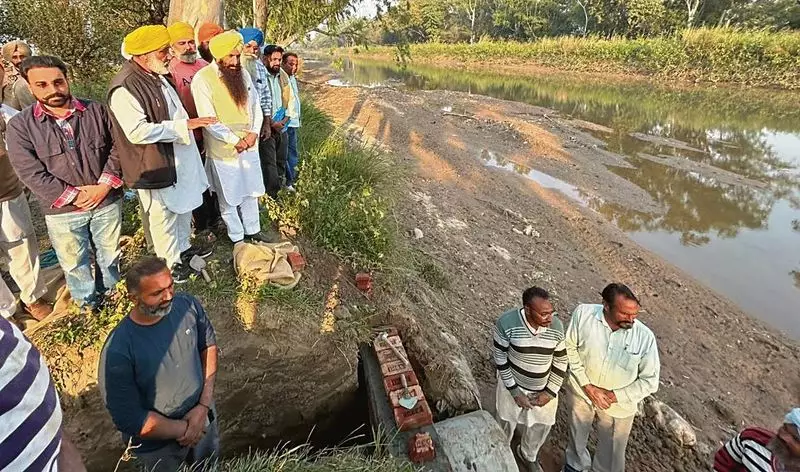
In a significant move to correct a historical injustice, Members of the Legislative Assembly (MLAs) in Punjab are championing the construction of new canal projects. Their goal is to rectify a water distribution error that has plagued the region for over 120 years, primarily affecting areas around the industrial hub of Ludhiana.
A Colonial-Era Mistake Haunts Modern Punjab
The root of the problem dates back to the early 1900s during British rule. In 1907, the then government constructed the Sidhwan Canal from the Sutlej River. However, in a decision that would create lasting inequity, the canal's alignment was deliberately shifted. It was moved about 8 kilometers away from the town of Ludhiana, depriving the area and its surrounding villages of a crucial water source for irrigation.
This decision, seen by many as a punitive measure against local landowners of the time, has had long-term consequences. For more than a century, vast tracts of land in the Ludhiana region have remained dependent on erratic rainfall and expensive tube-wells, stifling agricultural potential and development.
Political Will Drives the Correction Effort
Now, a concerted effort is underway to finally address this century-old blunder. Leading the charge are local MLAs who have made the canal projects a top priority. MLA from Gill constituency, Kuldeep Singh Vaid, has been particularly vocal, highlighting the ongoing struggle of farmers and the need for equitable water distribution.
The proposed solution involves constructing new canal channels to bring water from the Sutlej River to the parched lands. These projects are currently "in the pipeline," with detailed plans being formulated by the state's irrigation department. The MLAs are actively lobbying the state government to allocate necessary funds and expedite the technical approvals to turn these plans into reality.
The Expected Impact on Agriculture and Development
The successful implementation of these canal projects promises a transformative impact:
- Boost to Irrigation: Thousands of acres of farmland will gain access to reliable canal water, reducing dependence on groundwater and lowering farming costs.
- Agricultural Growth: Consistent water supply is expected to increase crop yield and diversity, strengthening the agrarian economy of the region.
- Rural Development: Improved water security can spur overall development in the villages around Ludhiana, potentially checking migration to cities.
- Historical Justice: The projects symbolize a correction of a colonial-era wrong, addressing a grievance held for generations.
The push for these canals represents a rare instance of political focus on long-term infrastructure over short-term gains. It underscores a recognition that rectifying historical errors in water management is essential for Punjab's sustainable future. As plans move forward, farmers and residents in the Ludhiana belt await a new chapter of water equity, hoping to close the book on a blunder that is over a century old.