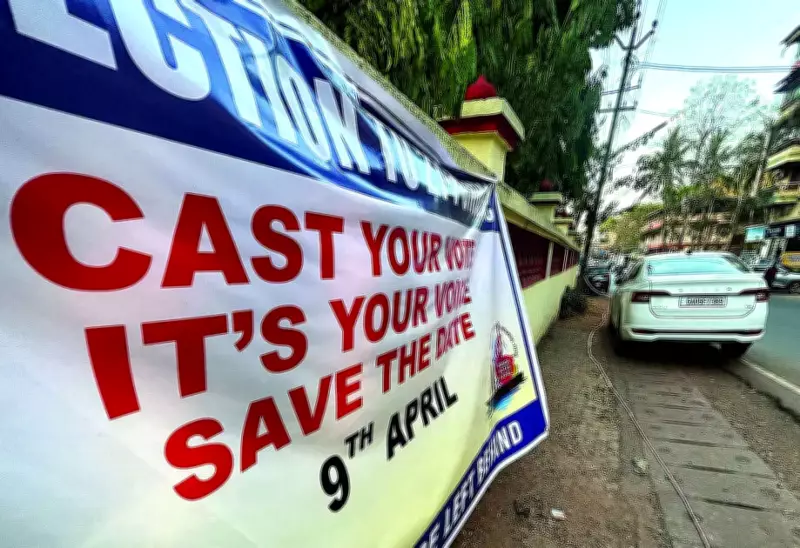
Goa High Court Cancels Ponda Bypoll, Constituency Left Without MLA Until 2027
In a significant judicial ruling, the Goa High Court has cancelled the Ponda byelection scheduled for Wednesday, effectively leaving the residents of Ponda without any representation in the state legislative assembly until the general elections in 2027. This decision has sparked widespread concern about democratic representation and constitutional principles.
Background: Vacancy Following MLA's Death
The need for a byelection arose following the death of former agriculture minister and Ponda MLA Ravi Naik on October 14, 2025. His passing reduced the strength of the Goa legislative assembly from 40 members to 39. Ponda residents, who expected to elect a new representative through the byelection, now face an unprecedented situation where they must wait approximately 10 more months without any elected voice in the assembly.
Legal Basis for Cancellation
The High Court's ruling centered on the Election Commission's March 16 notification declaring the Ponda bypoll. The court deemed this notification "arbitrary" because it contravened proviso 151A(a) of the Representation of the People Act, 1951. This provision exempts the Election Commission from holding elections if the remainder of the term of the legislator, in relation to the vacancy, is less than one year.

Legal experts have raised serious questions about this interpretation. "A parliamentary form of democracy is the basic feature of the Constitution," explained one lawyer involved in the case. "It empowers the public to make government accountable for its policies. If the people remain unrepresented for over one and a half years after the vacancy of an MLA, the law is hitting the basic feature of the Constitution as there is no one to voice their concerns in the assembly in case of injustice."
Democratic Implications and Expert Reactions
Senior advocate and political observer Cleofato Coutinho emphasized the broader implications of this decision. "The cancellation of the Ponda bypolls has serious implications for the country and democracy," Coutinho stated. "A constituency going unrepresented for over a year is unheard of and not acceptable. The interpretation of Section 151A of the Representation of the People Act deserves to be tested before the Supreme Court by the Election Commission of India."
Coutinho criticized the Election Commission for what he described as lethargic handling of the matter. "The ECI has messed up the matter and abdicated its responsibility," he asserted. "In case the ECI does not challenge the matter, it will be seen as being complicit in denying the Ponda electorate their representative. For the fault of ECI, why should Ponda suffer?"
Potential Next Steps and Political Responsibility
Coutinho suggested multiple avenues for addressing this constitutional dilemma. Political parties could take the matter to the Supreme Court to demonstrate their commitment to democratic principles. Alternatively, citizens of Ponda might initiate legal action themselves. "The political parties ought to have taken a stand before the high court," Coutinho noted. "Now they can take it up before the Supreme Court at least to show they were serious. Some Ponda citizens could also take it up."
Impact on Ponda Constituents
Advocate Narendra Sawaikar highlighted the practical consequences for Ponda residents. "The aspirations and demands of the people of Ponda constituency will remain unattended," Sawaikar explained. "Government can help the public with regard to administration, but people connecting with local representatives will be missing in the constituency."
This situation creates a unique governance challenge where administrative functions may continue through government machinery, but the crucial link between constituents and their elected representative—essential for addressing local concerns, advocating for community needs, and ensuring political accountability—will be absent for an extended period.

Broader Constitutional Questions
The case raises fundamental questions about democratic representation in India's parliamentary system. Legal experts are debating whether the one-year exemption in Section 151A should override the constitutional right to representation. The tension between procedural efficiency and democratic principles has become particularly acute in this instance, where a substantial constituency faces prolonged disenfranchisement.
As Ponda prepares for an unprecedented period without legislative representation, all eyes turn to potential appeals to the Supreme Court and the Election Commission's next moves in this constitutional drama that affects not just one Goa constituency, but potentially sets precedents for democratic representation across India.