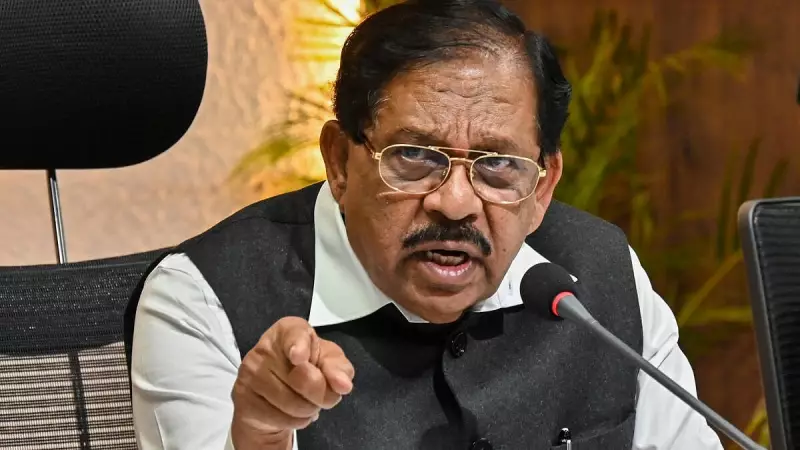
Karnataka's political landscape witnessed a fresh controversy as Home Minister G Parameshwara firmly rejected allegations of interference leveled against Deputy Chief Minister D K Shivakumar by former Chief Minister H D Kumaraswamy. The charge stems from a meeting convened by Shivakumar concerning the recent Ballari violence.
The Core of the Controversy
The political spat erupted after Kumaraswamy accused Deputy Chief Minister D K Shivakumar of overstepping his bounds. The Janata Dal (Secular) leader alleged that Shivakumar had interfered in the affairs of the state home department by calling a meeting of senior police officers. This meeting was specifically related to the investigation and handling of the violent incidents that recently occurred in Ballari.
Kumaraswamy's criticism implied that Shivakumar's actions undermined the authority of the official in charge, Home Minister G Parameshwara. The move was seen as an attempt to question the established chain of command within the state government's administrative framework.

Home Minister's Firm Rebuttal
In a strong response, Home Minister G Parameshwara dismissed the allegations made by H D Kumaraswamy. Parameshwara clarified the context of the meeting and defended his colleague's actions. He emphasized that there was no unauthorized interference in the functioning of his department.
Parameshwara pointed out that as senior ministers in the government, consultations and discussions on critical issues like law and order are routine and necessary. He framed Shivakumar's involvement as part of a collaborative governance approach rather than an intrusive one. The Home Minister's statement aimed to present a united front within the ruling party and quell any notions of internal discord or power tussles.
Timing and Political Undertones
The exchange took place against the backdrop of the Ballari violence, a sensitive law and order situation that demands a coordinated government response. The public airing of grievances by Kumaraswamy, a key opposition figure, on 09 January 2026, adds a layer of political maneuvering to the administrative issue.
Analysts suggest such accusations are often leveraged to highlight perceived instability or lack of clarity within the ruling dispensation. By labeling Shivakumar's actions as 'interference,' the opposition seeks to project an image of a government where ministers operate in silos or encroach upon each other's domains.
Implications and the Way Forward
The immediate consequence of this war of words is a renewed focus on the internal dynamics of the Karnataka government. While Parameshwara's rejection has temporarily shut down the narrative of interference, it keeps the Karnataka home department in the spotlight for reasons beyond its primary function of maintaining law and order.
For the public, the core issue remains the effective resolution of the Ballari violence case. The political debate over meeting protocols, while significant for administrative propriety, must not divert attention from ensuring justice and peace in the district. The government's ability to handle both the situation on the ground and the political rhetoric in the capital will be closely watched.
This incident underscores the delicate balance in coalition or multi-leader governments where the demarcation of roles and public collaboration are constantly scrutinized. The firm rebuttal from the Home Minister is likely to close this chapter officially, though political opponents may continue to reference it to critique the government's cohesion.